Florence: Cinque Terre Day Trip with Optional Hiking or Pisa
6.221 reviews
Buy now
From 55,00€ per person
Blessed with a mild climate year-round and winter temperatures considerably more pleasant than elsewhere in northern Italy, Liguria is a region that offers dream holidays in every season. There are therefore no absolute best months for a holiday in Liguria – it depends on what kind of break you’re after.
Summer is the preferred season for most tourists and is indeed a good time to spend a seaside holiday and enjoy the region’s stunning landscapes, but if you’d rather hike or cycle than sunbathe and swim, it’s better to visit in spring or early autumn.
In these seasons, temperatures are still wonderfully pleasant, but there’s far less crowding about, and you might find a decent deal on accommodation. Winter is ideal for those who want to explore the charming villages of Cinque Terre or other well-known spots in peace and quiet.
Before you go, take a look at the calendar of annual events: Liguria is a dynamic and culturally vibrant region, so every season is brought to life by festivals, concerts, shows and sporting events that can be a lovely addition to your holiday. Or perhaps even a good excuse to get away.
We’ve dedicated an entire page to Liguria’s weather, with all the useful information about average temperatures, rainfall and forecasts for the next five days. Below you’ll find the events in Liguria month by month.
Blending ancient traditions with modern shows, there’s a wealth of things to do on 6 January in Liguria. The arrival of the Befana is eagerly anticipated in every village; in Genoa, the gift-bearing old woman really goes all out, arriving by land or sea in all sorts of creative ways.
Some hotels in seaside resorts stage themed shows and offer all-inclusive packages to capture an additional window of tourist arrivals beyond the traditional beach season.
Since Ligurian winters are considerably milder than in other regions, why not come here to receive the Befana’s gifts?
Like much of Italy, Liguria loves to celebrate Carnival. Masked balls and parades of allegorical floats are organised in countless locations, from tiny villages to major cities.
Among the most important in Liguria are the carnivals of Albenga, Albissola, Finale Ligure, Loano and of course Genoa. In Suvero, the stars of the show are the ugly and the beautiful, in Moneglia it’s the pumpkin, and in Sanremo it’s flowers.
Does it really need an introduction? The Italian Song Festival and Sanremo have been an inseparable pair for over 70 years. Every late February, the spotlight of the Ariston Theatre illuminates Italy’s biggest names in music and television, broadcast live for the delight of millions of viewers.
If you fancy treating yourself to the thrill of experiencing the festival in person, start saving for a ticket and book your hotel months in advance.
Considered a sort of preview of the Giro d’Italia, the Milan–Sanremo is an unmissable appointment for cycling enthusiasts everywhere.
Also known as the Spring Classic or Classicissima, it’s a one-day professional road cycling race covering nearly 300 km on a route that has remained essentially unchanged since the first edition. The finale of this thrilling sporting challenge takes place along the Via Aurelia, the coastal highway that runs through Liguria, with the breathtaking landscape of the Ponente Riviera as its backdrop.
The exact date of the race varies from year to year, but always falls on the Saturday closest to 19 March (the date of the first editions).
It’s not an annual event, which makes it all the more special. If you happen to be in Genoa during an edition of Euroflora, you absolutely cannot miss it: it’s one of the world’s most important international events dedicated to flowers and plants, a spectacular showcase of nature’s colours, shapes and fragrances.
Inspired by the flower shows of Ghent, Nantes and Budapest, the Genoa International Flower and Ornamental Plant Exhibition is an exceptional showcase for those in the industry to discover new trends in horticulture, while for visitors it’s a unique chance to stroll through lush gardens with splendid sea views.
It takes place roughly every 4–5 years.
On an enormous stainless-steel pan four metres in diameter perched over the sea, tons of fried fish are cooked and distributed free to locals and tourists. It’s not hard to see why the Fish Festival of Camogli draws such crowds!
This unique gastronomic festival has been held every year since 1952 on the second Sunday in May. In the first two editions, the fish was cooked in small pans; in 1954 came the first large pan, and its size has been growing ever since. The current one was introduced in 2001.
The evening before the festival, a religious procession is held in honour of the fishermen’s patron saint, San Fortunato, followed by a fireworks display and a bonfire.
For over 25 years, Palco sul Mare has been a fixture of the Ligurian summer: an event featuring a rich programme of concerts, cabaret shows and other outdoor events bringing well-known artists and more eclectic offerings to the stage.
The main venue is Genoa’s Porto Antico, but events are also organised at other points around the city and in nearby locations.
Founded in 1999, the Suq Festival aims to be just like the Arab markets its name recalls – a place of exchange and convergence. This kind of symbolic bazaar where people, languages and diverse cultures meet finds its ideal home in Genoa, a maritime city that for centuries has been open to cultural exchange.
This historic event brings countless theatre, dance and music shows and workshops to the city, as well as ethnic cuisines and craft shops from around the world. The main events take place at Porto Antico, but stages are set up across various parts of the city.
Four cities, four powers that built their fortunes on the sea: these are the glorious Italian Maritime Republics. Every year in one of these four cities, a historic regatta is held that, with a thrilling competitive race of historic boats and costumed parades, recalls the golden age when the Maritime Republics dominated the Mediterranean (and beyond).
Physical strength, preparation and great pride drive the oarsmen in their determined battle for first place. Symbols of a world that no longer exists, they are cheered on with passion and enthusiasm by the crowds that gather to take part in the event.
The Historic Maritime Republics Palio takes place in Genoa once every four years; other editions are held in Venice, Pisa and Amalfi. The date changes from year to year and is generally sometime between late May and August; 1 July is the date of the first edition, held over 60 years ago.
Once upon a time, being first back to port for fishermen meant being first to sell their catch, earning more and enjoying more rest. This gave rise to an informal tradition of races among fishermen in the La Spezia Gulf, which is recreated every year during the Palio del Golfo.
It’s a rowing race between 13 boats held in the waters off La Spezia town centre. The participating boats are similar to the national gozzo, with modifications to make them more agile and faster, adding to the thrill of the competition; they are still handcrafted by local artisans today.
The festivities begin on the first Friday in August with a traditional parade. The next day brings the weighing of the boats, whilst Sunday is the highly anticipated race day, divided into three categories (women’s, junior and senior).
The Fire Festival of Recco is one of Liguria’s most enchanting and famous traditional celebrations. It takes place on 6, 7 and 8 September each year, when the city pays homage to its patron saint, the Madonna, Our Lady of Succour.
The festivities blend religious solemnity with popular festivity. The highlights of the festival are the firing of the mascoli (ancient Ligurian mortars), the symbolic offering of candles and especially the procession of the Ark of the patron saint. The grand finale features fireworks in which the city’s seven historic quarters compete in an exciting race-spectacle on the sea.
Prestigious venues, the discovery and promotion of rare music, themes that introduce audiences to the languages and cultures of distant peoples: these are the ingredients behind the success of the Mediterranean Music Festival.
Over three decades, the event has brought Turkish dervishes, Amazonian indigenous peoples, African and Asian drummers, Tuareg from the desert, Australian Aborigines and musicians from around the world to Genoa.
The heart of the programme is naturally the open-air concerts, but theatre shows, dance performances and children’s workshops are also organised.
Liguria hosts many sailing events, but the classic regatta of the Historic Vessels of Imperia is capable of captivating even those outside the nautical world.
Started in 1986 with 30 boats, this gathering today attracts around 80 magnificent historic vessels from around the world and a huge audience keen to admire them. Due to its importance, it has been included in the Panerai Classic Yacht Challenge, a prestigious international circuit of regattas reserved for historic sailing vessels.
The days of the event are packed with moments of spectacle and shared experience to enjoy on the water or along the waterfront.
Promoted as the Mediterranean’s largest boat show, the Genoa Boat Show is certainly one of the top appointments for leisure boating enthusiasts.
Over 200,000 square metres of exhibition space on land and water host a show entirely dedicated to sailing, one to outboards, one to yachts and superyachts, and one to components.
During the six days of the event, numerous side events are organised (workshops, sea trials, competitions, conferences, concerts…) and exclusive initiatives to experience the show in a special way, including a helicopter shuttle and transport service.
Between late October and early November, Genoa becomes the hub for science communication. The Genoa Science Festival is indeed one of the world’s most important international events for promoting scientific culture: 11 days packed with meetings, workshops and shows in which maths, biology, chemistry and other potentially “challenging” subjects are made accessible to everyone in a fun and engaging way.
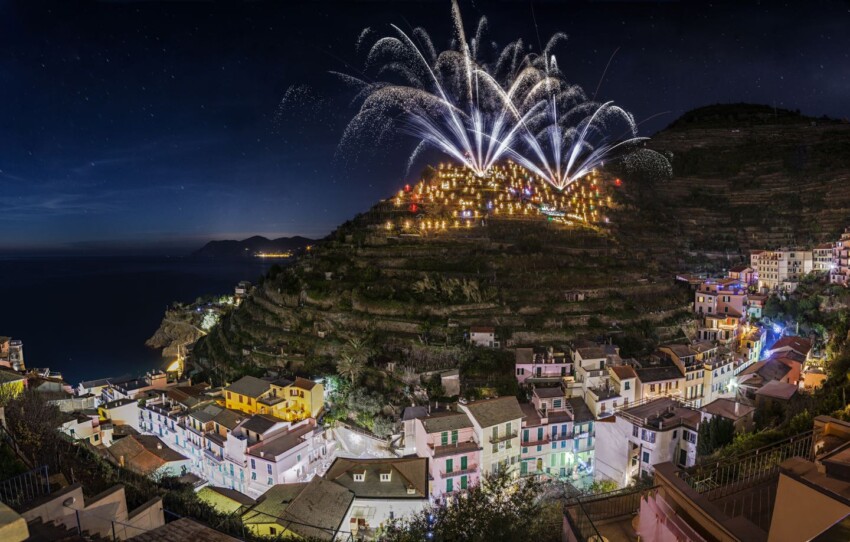
Visited year-round as one of the enchanting villages of Cinque Terre, Manarola truly comes into its own during winter: in December, its celebrated open-air nativity scene is unveiled.
Conceived by a Manarola resident in 1961, it comprises a series of figures (initially just a few, now over 200) crafted from recycled materials and scattered across the hillside overlooking the village.
The Manarola nativity scene can be admired from the sea or from the town centre, and whichever vantage point you choose, the overall vista is quite breathtaking. It’s inaugurated around 8 December and remains in place until the end of January or early February.
Confuoco (or Confuego in the local dialect) is an ancient tradition still celebrated in the days leading up to Christmas in many Ligurian towns, though it’s particularly cherished in Genoa and Savona.
The centrepiece of the festivities is a laurel tree trunk offered to the city authorities and burned before an assembled crowd. Traditionally, the direction the flames took was considered an omen of what the coming year would bring.
In Savona, Confueco is celebrated on the Sunday before Christmas, whilst in Genoa it takes place on Saturday.
Christmas festivities in Genoa have been synonymous with spectacle and artistic experimentation for the past twenty years. The first edition of Circumnavigando dates back to 2001, and from 26 December to 6 January the festival brings the best of contemporary circus and street theatre to the city.
One of Italy’s pioneering circus festivals, it’s known for the calibre of its performances, staged by acclaimed international artists working across an extraordinary range of genres and styles.
The packed programme includes shows, talks and exhibitions, some free of charge, others ticketed; the centrepiece is the New Year’s Eve Gala held in a big top (naturally, in true circus style!).
For those who love celebrating New Year’s Eve in the piazza, Liguria offers plenty of ways to ring in the new year in style. Among the many outdoor events on 31 December across the region, the most crowded is undoubtedly the New Year’s Eve celebration in Piazza Ferrari in Genoa, enlivened by a DJ set that carries on into the small hours.
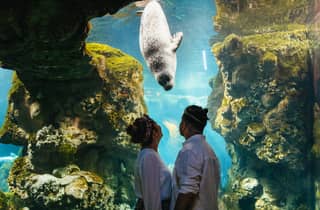
If you’d prefer to stay warm indoors, there’s a wealth of events organised by restaurants, luxury hotels and prestigious venues. The most original is undoubtedly the New Year’s Eve Dinner at the Aquarium.
 Hotel
Hotel  Budget accommodations
  Apartments
  Family Hotel
  Luxury Hotel
  Resorts