Florence: Cinque Terre Day Trip with Optional Hiking or Pisa
6.221 reviews
Buy now
From 55,00€ per person
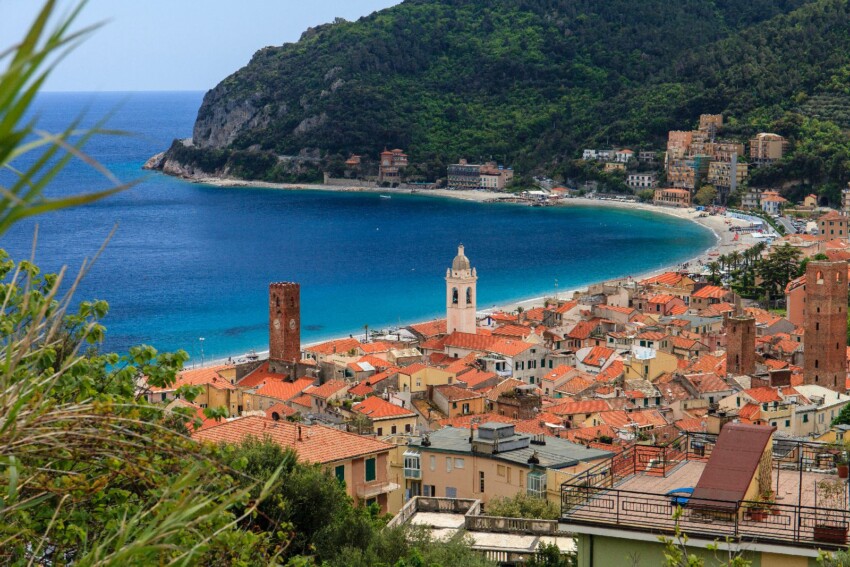
Liguria is one of Italy’s most versatile regions for a weekend getaway: less than two hours by train from Milan or Turin brings you to one of Italy’s bluest seas, among ancient villages with the aroma of basil and panoramas that plunge dramatically towards the coast. This narrow strip of land — just 18 km wide on average between the Maritime Alps and the Ligurian Sea — contains an extraordinarily varied tourist offering that changes radically depending on the season and area you choose.
A weekend in Liguria can mean very different things: losing yourself in Genoa’s caruggi, following the Azure Trail to the Cinque Terre, relaxing on a beach on the Riviera di Ponente, or exploring the medieval villages inland where time seems to have stood still. The region traditionally divides into two rivieras: the Riviera di Levante, east of Genoa, with a jagged coastline, crystalline waters and villages like Portofino, Camogli and Sestri Levante; and the Riviera di Ponente, to the west, with wider beaches and one of Italy’s mildest climates thanks to the Maritime Alps shielding it from cold northern winds.
In this guide we’ve gathered the best ideas for a weekend in Liguria, organised by type of trip, to help you find the itinerary that suits your expectations best: whether you want a romantic escape, an outdoor adventure, a cultural discovery or simply a few days of seaside relaxation.
For those who want to base themselves in a single location and move around easily during the day, car hire is worth considering: the region is full of scenic roads connecting the coast with inland villages, and many of the most beautiful places are difficult to reach by public transport alone. Also check our guide on when to visit Liguria to choose the best time based on the season and scheduled events.
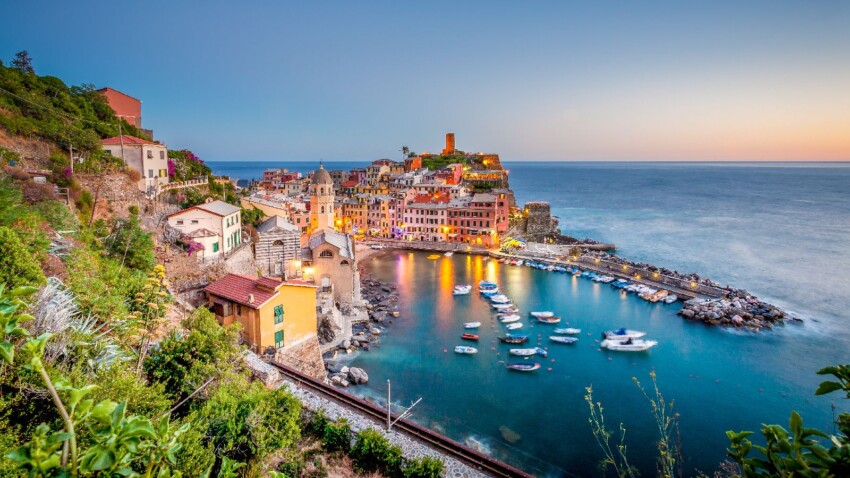
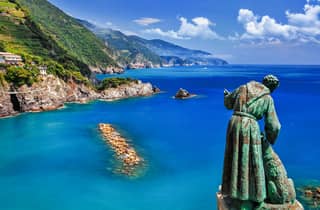
The Cinque Terre are probably Liguria’s most recognisable postcard in the world and one of Europe’s most visited coastal destinations. Monterosso al Mare, Vernazza, Corniglia, Manarola and Riomaggiore — the five villages declared UNESCO World Heritage Sites in 1997 — line an extraordinarily scenic rocky coast, connected to each other by trails in the Cinque Terre National Park and regular regional train services.
A weekend at the Cinque Terre is best planned with a fixed base. Monterosso is the most convenient choice for those seeking a wide beach and the most amenities. Vernazza, with its fishing harbour dominated by a medieval tower, is the most photogenic and the ideal starting point for hikes. Manarola offers one of the coast’s most spectacular views, especially at sunset from Punta Bonfiglio. Corniglia, the only one without direct sea access, is reached after climbing about 400 steps, but rewards you with a peace and perspective over the coast that’s well worth the effort.
In high season (July-August) it’s essential to book accommodation several months in advance. To avoid the morning rush of tour buses, it’s best to set off early: at 7:30 am the five squares are still quiet and the low-angle morning light enhances the colours of the facades. The village of Levanto, just beyond the park’s northern boundary, is a quieter and less expensive overnight alternative from which to reach the Cinque Terre in just a few minutes by train.
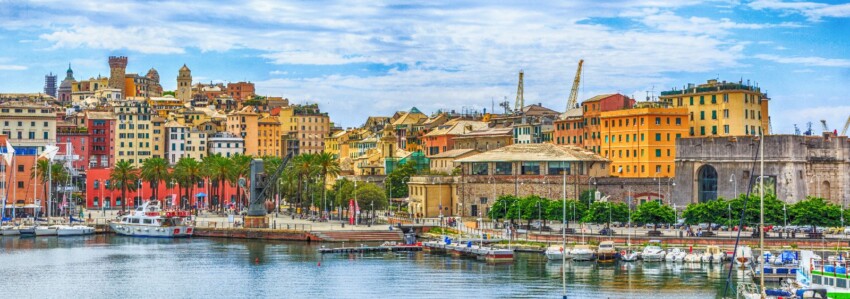
Genoa is Liguria’s most underrated destination, often rushed through by those heading for the coast — and that’s a mistake. The Ligurian capital conceals one of Europe’s largest medieval old towns, declared a UNESCO World Heritage site in 2006 along with its extraordinary Palazzo dei Rolli, the noble residences that from the mid-sixteenth century onwards hosted illustrious visitors to the Republic on a rotating basis.
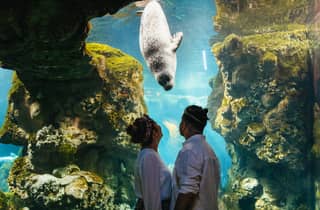
A weekend in Genoa naturally opens at the Porto Antico, redeveloped in the 1990s by Renzo Piano, home to Genoa’s Aquarium — Italy’s largest, with over 70 tanks — and the Bigo, a viewing structure overlooking the port. From there you enter the labyrinth of caruggi, Italy’s narrowest and most densely packed medieval alleys, dotted with historic shops, friggitorie (fried food stalls) where you can taste freshly baked farinata, and baroque churches that open suddenly onto the cobblestones.
Via Garibaldi — today renamed Strada Nuova — retains its intact renaissance palaces with their loggia courtyards: Palazzo Rosso, Palazzo Bianco and Palazzo Doria Tursi now house important civic museums, with works by van Dyck, Rubens and one of northern Italy’s most complete ceramic collections. For those visiting Genoa on Rolli Days weekends (usually in May and October), dozens of private palaces open their doors free to the public: an appointment worth marking in your calendar. Our guide to what to see in Genoa will help you not miss anything during your two days there.
In the evening, bars around Piazza delle Erbe animate Genoa’s nightlife, while for dinner tradition dictates trofie with pesto, salt cod stew or a portion of cappon magro in one of the old town’s restaurants. Check our guide on where to eat in Genoa to navigate among historic osterie and authentic Ligurian trattorias.
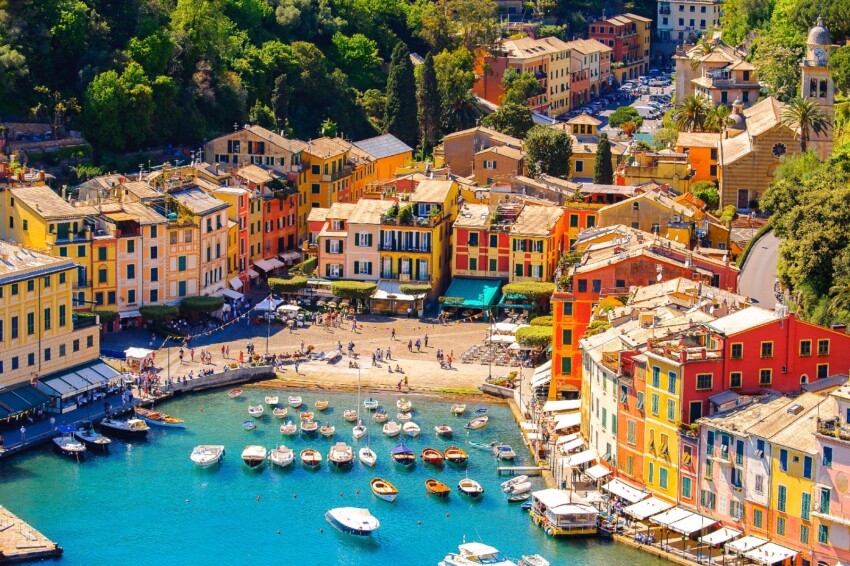
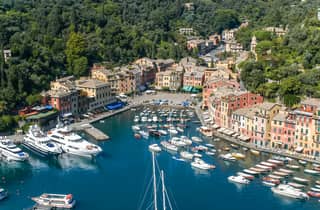
Portofino is one of Italy’s most famous villages and among couples’ favourites: the pastel-coloured houses mirrored in the emerald-green waters of the harbour, the scents of the Mediterranean scrub, the scenic trails that traverse the promontory — everything contributes to creating an atmosphere hard to replicate elsewhere. The best way to reach it without stress is to leave your car at Santa Margherita Ligure and take the boat or walk the coastal path connecting them (about 4 km with continuous sea views).
The Portofino Promontory offers a network of trails of varying difficulty that merit at least half a day. The route to Portofino Lighthouse (about 45 minutes from the village) offers perspectives over the Tigullio Gulf that you’ll struggle to forget. Those who love the sea can head down to the San Fruttuoso Bay, reachable also by boat from Camogli: the medieval Benedictine abbey that opens onto the cove is a sight out of time, and at only 17 metres depth rests the Christ of the Abyss, the bronze statue sunk in 1954.
A few kilometres away, Camogli is a more authentic and less crowded alternative to Portofino, with its seafront of tall, coloured buildings, the morning fish market and the famous fried fish festival in May — one of Liguria’s most spectacular celebrations. For accommodation, the area between Santa Margherita, Rapallo and Camogli offers a wide choice of hotels with gulf views, from boutique solutions to historic waterfront villas.
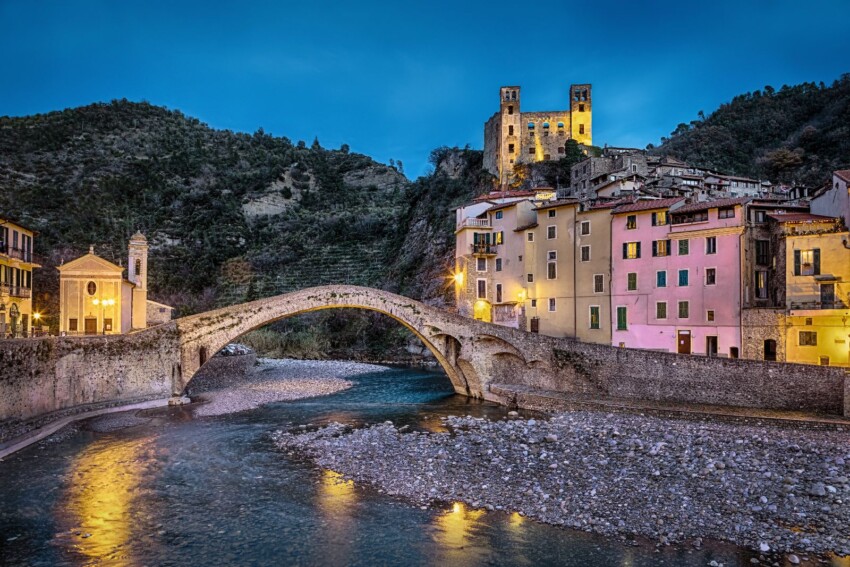
The Riviera di Ponente — the stretch of Ligurian coast between Genoa and the French border — has a different character to the Riviera di Levante: beaches are wider, the climate is exceptionally mild all year round and the medieval villages inland are among the region’s most suggestive and least crowded. Alassio and Albenga are excellent bases for exploring this part of Liguria.
Finalborgo, the historic core of Finale Ligure, is one of the best-preserved examples of a Ligurian medieval village: sixteenth-century walls embrace a maze of alleys with noble palaces, Romanesque churches and the central square with its arcades. Nearby are the Toirano Caves, about twenty kilometres away: the 1,300-metre route through stalactite formations and ancient clay floors with cave bear footprints is one of Liguria’s most engaging experiences.
Inland from Ventimiglia, two villages merit a detour: Dolceacqua, with the Doria Castle and the distinctive arched Ponte Vecchio that inspired a Claude Monet painting in 1884; and Apricale, clinging to rock with its muraled alleys and medieval castle at the village centre. Bussana Vecchia, the village abandoned after the 1887 earthquake and recolonised from the 1960s by artists and craftspeople, is also worth a stop for its surreal and unique atmosphere.
Sanremo offers a weekend with a different flavour: the historic casino, the Ariston Theatre, the flower market, the alleys of Pigna (the medieval centre) and animated beaches coexist in a city that manages to be both sophisticated and authentic. From here you can follow the Ponente Ligure Cycle Path, which runs for 24 km along the sea from San Lorenzo al Mare to Ospedaletti on a former railway bed.
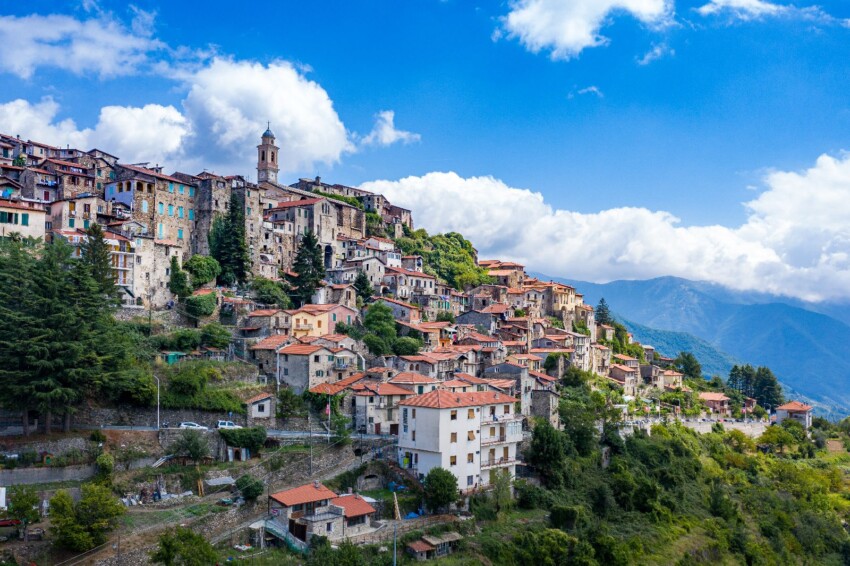
Just a few kilometres from crowded beaches exists a wild and silent Ligurian hinterland, with historic villages, chestnut woods and trails climbing to 2,000 metres in the Ligurian Alps. A weekend in the hinterland is the ideal choice for those seeking clean air, trekking and direct contact with local rural culture. In our section dedicated to Liguria’s most beautiful villages you’ll find all the towns worth visiting, from hinterland to coast.
In the Imperia area, Triora — known as the “village of witches” for the witchcraft trials of 1587-1589 — retains a mysterious atmosphere and a small ethnographic museum dedicated to this historical event. The village is immersed in a landscape of woods and peaks that in autumn takes on extraordinary colours. Nearby, Taggia is a medieval centre often overlooked by tourist circuits, with a fifteenth-century Dominican convent and an important art gallery.
For trekking enthusiasts, the Alta Via dei Monti Liguri is a 440 km route that crosses the entire region from Ventimiglia to Lunigiana, along the ridge between the sea and the Po Valley plain. It can be tackled in stages even just for a weekend, enjoying alternating views of the Ligurian coast and the Alps. On the marine side, the Protected Marine Area of Bergeggi Island offers some of the Ligurian Sea’s most biodiverse seabeds, ideal for snorkelling and diving. Portovenere, at the southern edge of the Gulf of Poets, is also an excellent base for those wanting to combine sea, promontory trekking and visits to the Palmaria, Tino and Tinetto islands.
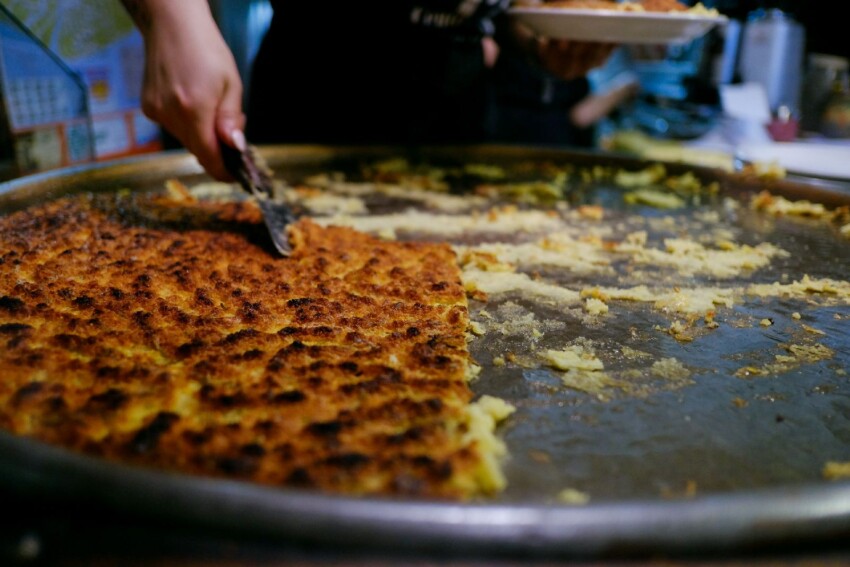
Ligurian cuisine is among Italy’s most distinctive: deeply vegetable-based and aromatic, rooted in maritime and agricultural traditions, yet refreshingly lighter than many other northern Italian regional cuisines. A gastronomic weekend in Liguria is a journey through precise, unrepeatable flavours best experienced away from the tourist restaurants of the coast.
Pesto genovese — traditionally prepared in a mortar with basil from Prà, pine nuts, Parmigiano, Pecorino, garlic and extra virgin olive oil — is the symbol of Ligurian cooking, but it’s merely the beginning. Focaccia genovese (fügassa) is eaten at breakfast with milk, fragrant and oiled to perfection: the finest versions come from bakeries in Genoa’s old town, though every bakery across the region has its own take. Farinata, a chickpea pancake cooked in copper tins in wood-fired ovens, is the other indispensable snack, particularly in Savona‘s version.
Inland, you’ll discover lesser-known but extraordinary products: prescinseua (fresh curd used in pansotti filling), porcini mushrooms from the Ligurian Apennines, salted anchovies from Monterosso — considered among Italy’s finest, thanks to deep-water fishing and traditional salting methods — and Pigato wine from the western Riviera, a minerally, fruity white that pairs beautifully with fish. The Imperia area and the Riviera dei Fiori are the heart of Liguria’s extra virgin olive oil production, with the Taggiasca cultivar yielding a delicate, fruity oil that ranks among Italy’s most prized.

Liguria is an ideal destination for families, thanks to generally calm waters, sandy beaches along the western Riviera and a richer array of child-friendly activities than you might expect. Genoa is the obvious first choice: the Aquarium — featuring an underwater tunnel, bioluminescent jellyfish and a shark tank — can easily fill an entire morning, whilst the Galata Museo del Mare, with its full-scale interactive ship reconstructions, ranks among northern Italy’s most engaging museums for children. For planning beach days, consult our guide to the sea in Liguria with children.
The Toirano Caves make an impression on children of all ages: the 1,300-metre route through stalactitic formations and an ancient clay floor bearing bear and prehistoric human traces delivers a visual and narrative impact that’s hard to forget. Nearby, the beaches of Finale Ligure and Varigotti offer sandy, shallow seabeds perfect for small children.
On the eastern side, the beaches of Sestri Levante — particularly the Baia del Silenzio with its calm waters and pedestrian seafront — rank among Liguria’s most successful family destinations. For older children, kayaking excursions along the Tigullio coast and walks through the terraced vineyards of Cinque Terre create lasting memories. Moneglia, a small village between Sestri Levante and Cinque Terre, is another ideal family base: the old town is just steps from the beach and far less crowded than better-known resorts.
 Hotel
Hotel 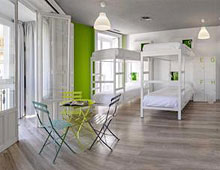 Budget accommodations
 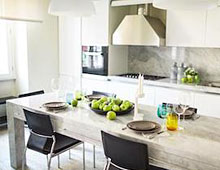 Apartments
  Family Hotel
 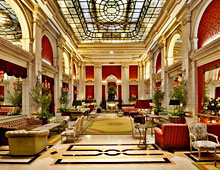 Luxury Hotel
 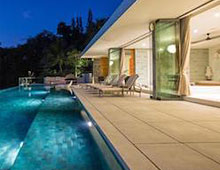 Resorts