LVG Hotel Collection
Alassio - Via Roma 63
Set on Alassio seafront, LVG Hotel Collection - Grand Hotel Mediterranee boasts a private beach, wellness centre and restaurant with a picturesque garden terrace.
Book now
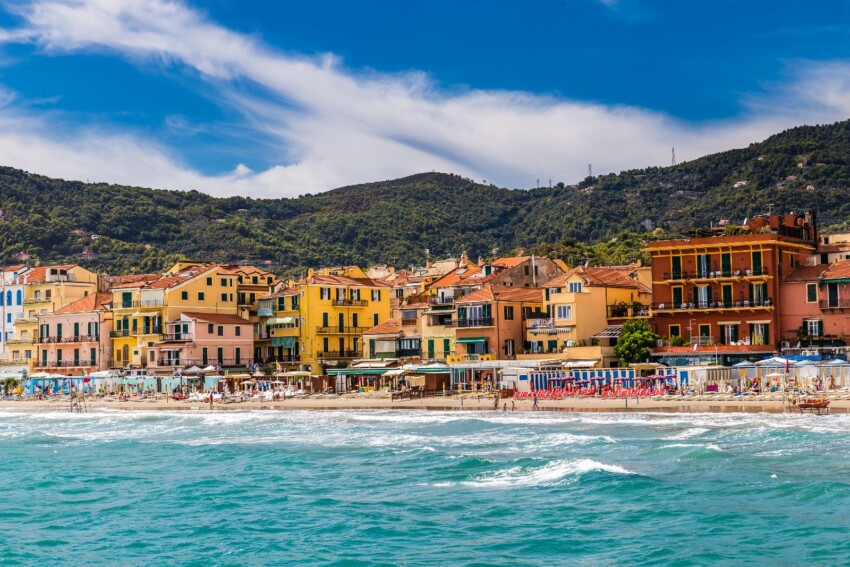
Romance and vibrant nightlife: that’s Alassio, a seaside resort in western Liguria famous for its long beach, countless venues for the young set, and a beauty pageant that ran for fifty years, launching the careers of young women who became celebrated television presenters.
But where does the romance come in, you ask? Well, Alassio has romance woven into its DNA. According to legend, Princess Adelasia, daughter of Otto I of Saxony, fell in love with Aleramo, the court wine steward, but her father stood in the way. The two lovers managed to fulfil their dreams anyway, and the place where they decided to settle was named Alaxia (later Alassio) in honour of the princess.
Truth be told, the city’s historical origins are rather more humble: the first settlements in the area date back to the ninth century, and for a long time Alassio was merely a small fishing village. Alassio maintains its romantic charm thanks to delightful local sweets (the Baci di Alassio) and a much-photographed statue erected on a colourful little wall adorned with ceramic tiles signed by famous personalities.
Nestled between Capo Mele and Capo di Santa Croce, Alassio is the first resort along the Riviera dei Fiori you encounter coming from Genoa. In centuries past it was a favourite destination for wealthy English visitors, but the tourism boom arrived in the Sixties, driven by the success of resorts like Sanremo and Portofino.
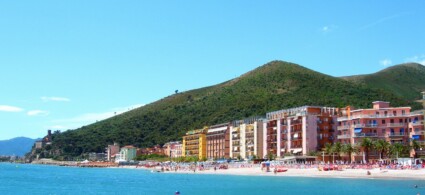
Its beach, stretching a full 4 km, is renowned for its sand with a high percentage of quartz and silicates: soft to the touch and rich in therapeutic properties, it’s the delight of swimmers who flock to Alassio every year for a wonderful seaside break.
The centre of Alassio is easy to explore on foot. Take your time wandering through its characteristic winding streets before visiting the attractions in the surrounding area.
Alassio’s most famous attraction is the colourful Muretto, created in 1953 from an idea by Mario Berrino, owner of the historic Caffè Roma.
To catch the attention of passersby, Berrino had the brilliant idea of decorating a low wall that bordered the public gardens next to his café with tiles decorated with the signatures of famous personalities. Ernest Hemingway was enthusiastic about the idea and autographed one of the first decorative tiles, placed secretly without municipal authorisation on what was at the time a wall of loose stones.
More followed, initially autographed only by illustrious customers of Berrino’s establishment, later by all manner of famous people passing through Alassio, and even by fictional characters.
Today the wall is a source of civic pride and the tiles that decorate it number over a thousand, all authorised and celebrated by the municipal administration.
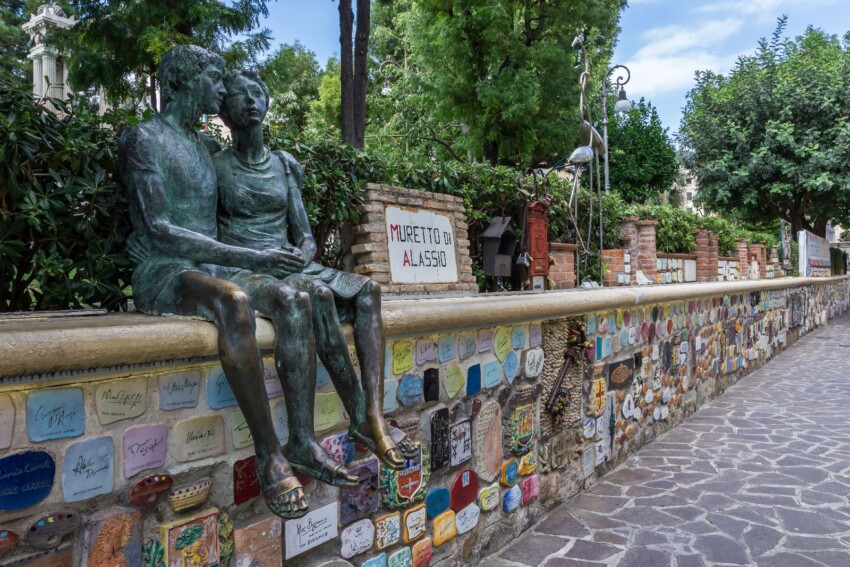
To mark the importance of the Muretto, a bronze statue depicting two lovers sitting together was placed along the celebrated wall in 1978, a work by sculptor Eros Pellini. The lovers on the Muretto have become Alassio’s most photographed attraction and are considered a symbol of the city.
The Budello is the beating heart of Alassio’s centre, or if you prefer, the artery running through it from one end to the other. It’s a typical caruggio, one of those narrow pedestrian streets or passages flanked by tall houses with colourful walls that characterise Ligurian cities.
It runs parallel to the seafront and is the typical shopping street and hub for “people watching”, perfect for strolling, browsing shop windows and observing the passing crowds.
Just a few minutes’ walk from Alassio’s centre you can reach one of its architectural gems: Villa della Pergola, an elegant late-nineteenth-century residence furnished in Anglo-Indian style.
The villa houses an exclusive hotel belonging to the Small Luxury Hotels of the World chain and is not open to visitors; however, from March to October its nineteenth-century gardens overlooking the sea are open to the public. The pride of this park is its collection of agapanthus comprising over 400 species and the 32 varieties of wisteria adorning the pergolas.
Don’t miss the chance to stroll through shaded avenues and pathways immersed in lush vegetation with plants from around the world. From the gardens of Villa della Pergola, situated on a hillside, you can also enjoy splendid panoramic views over Alassio, the sea and the nearby Gallinara island.
An unmissable excursion from Alassio is to Gallinara Island, an uninhabited islet that falls under the municipality of Albenga. It’s a place of great natural interest, with a very rich flora and fauna, but there’s no shortage of cultural attractions either, including an ancient Benedictine monastery, a defensive tower and a votive chapel.
Boat excursions to Gallinara from Alassio operate year-round, weather permitting; in the summer months they include one or more stops for swimming in the crystal-clear waters of this stretch of sea.
The Via Iulia Augusta is one of the most celebrated Roman roads, commissioned by Emperor Octavian Augustus to connect Rome with southern Gaul and built between 13 and 12 BCE.
Alassio has a section of this road still well preserved, today part of an interesting archaeological route that allows you to admire ancient ruins and breathtaking landscapes.
The route, which alternates between tarmac, dirt and stone surfaces (including the original Roman paving), links Alassio to Albenga, is about 5.5 km long and takes roughly two hours to complete.
In the following map you can see the location of the main places of interest mentioned in this article.
The Alassio beach is a narrow strip of very fine grey-white sand bordered by a row of houses right on the seafront; very extensive, it stretches for a full 4 km and reaches the nearby fishing village of Laigueglia. The seabed slopes gently, so swimming is safe.
The beach has both free sections and equipped areas; there’s also a dog-friendly beach for those travelling with their four-legged friend.
Numerous beach clubs in Alassio offer services and entertainment for all ages. The town beach is therefore suitable for both families with small children and young people seeking beachfront bars and entertainment.
By car you can easily reach other beach resorts along the Riviera di Ponente including Diano Marina, San Bartolomeo a Mare and Arma di Taggia.
Alassio is a popular tourist resort with a wide range of accommodation. Near the centre and beach you’ll find numerous hotels, bed & breakfasts, apartments and holiday lets.
Alassio’s hotels are predominantly three-star, but there’s also a good choice of luxury hotels, 4 and 5-star. There’s less choice for budget hotels: if you’re travelling on a shoestring, book as early as possible to secure the best-value rooms.
We offer a selection of hotels at Alassio to suit all categories of travellers. The most booked by tourists are the sea-facing hotels, often right on the beach. If you want to play it safe, choose one of the following: they are among the most booked hotels in Alassio, sorted by number of reviews.


If you prefer space, privacy and the ability to prepare your own meals to a hotel holiday, book a holiday home at Alassio. We recommend a few below, but in this case we advise you to book early because houses and apartments for rent at Alassio are in high demand.


Getting to Alassio by car is straightforward: simply take the A10 motorway Genoa-Ventimiglia (recommended exit: Albenga); you can also reach it via the SS1 Aurelia road. Getting to Alassio by train is also convenient, as the city lies on the Genoa-Ventimiglia railway line, served by numerous regional and Intercity trains.
The nearest airport is Genoa, though you can sometimes find better flight deals to Nice.
What's the weather at Alassio? Below are the temperatures and the weather forecast at Alassio for the next few days.
Alassio is a town in the province of Savona, in the Riviera dei Fiori (part of the Riviera di Ponente), approximately 45 km from the provincial capital and 100 km from Genoa (heading east). Imperia is just 20 km away to the west; the French border is also nearby, around 80 km distant.

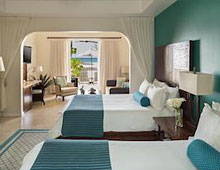 Hotel
Hotel 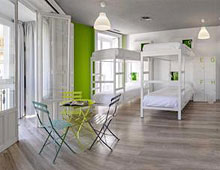 Budget accommodations
 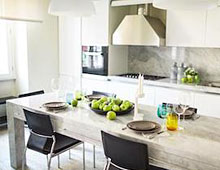 Apartments
  Family Hotel
 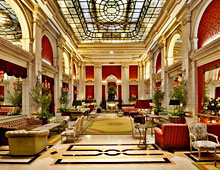 Luxury Hotel
 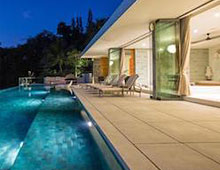 Resorts