Florence: Cinque Terre Day Trip with Optional Hiking or Pisa
6.221 reviews
Buy now
From 55,00€ per person
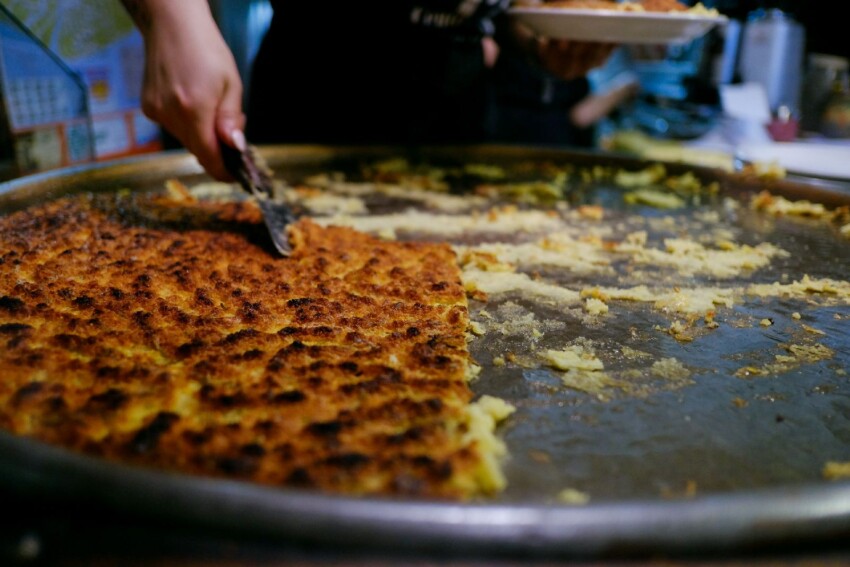
Ligurian cuisine is one of Italy’s most original and distinctive: vegetable-based, aromatic, and essential, forged in a narrow territory between mountains and sea that forced centuries of resourcefulness to create abundance from scarcity. Butter and cream are almost absent, meat is used sparingly, and cured meats have no place in local tradition. Instead, extra virgin olive oil dominates, along with aromatic herbs, wild vegetables, legumes, fish, and a handful of recurring ingredients — pine nuts, anchovies, dried mushrooms, marjoram — that give every dish an instantly recognisable Ligurian character.
It is a cuisine born from necessity that has become refined: Genoese sailors carried food that could withstand long voyages, inland housewives foraged every wild herb growing on the Apennine slopes, and coastal fishermen transformed small fish into recipes that could feed entire families. The result is a gastronomic repertoire spanning everything from globally recognised dishes — pesto genovese above all — to regional specialities barely known beyond Liguria, such as mesciua spezzina or testaroli della Lunigiana.
What follows is a guide to the flavours you cannot miss during your journey through Liguria, taking you from breakfast to dinner, from street food stalls to fish restaurants, from the caruggi alleys of Genoa to the villages of Cinque Terre and the markets of the Imperia hinterland. Every product has its zone of excellence, every dish has its story: knowing them will help you eat better and understand the region more deeply.
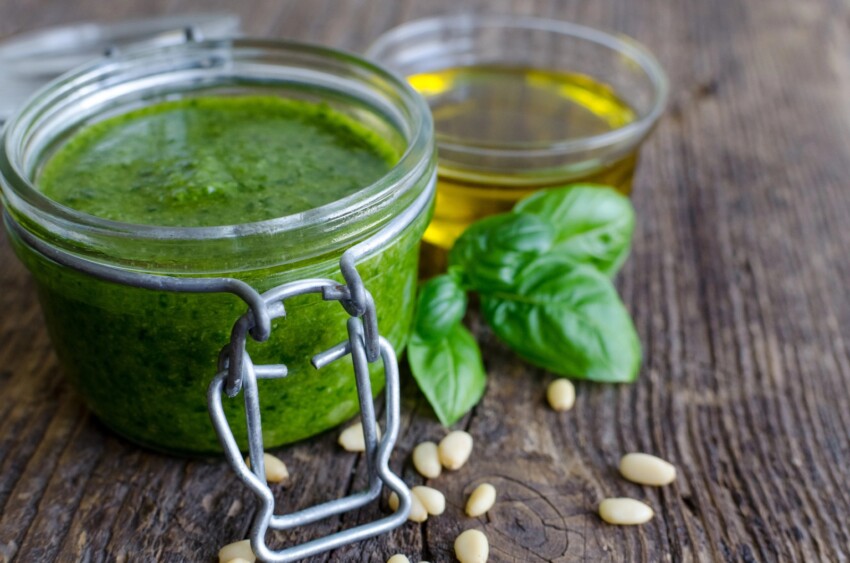
No other dish represents Liguria quite like pesto genovese: a green sauce prepared cold in a marble mortar with a wooden pestle, uniting basil, pine nuts, garlic, Parmigiano Reggiano, Pecorino Sardo and extra virgin olive oil. The recipe seems simple, but each ingredient carries its own weight and the quality of the result depends entirely on what goes inside.
The basil that matters is PDO Prà basil, from the hillside neighbourhood west of Genoa where the microclimate produces small, tender leaves without the minty note that characterises basil grown elsewhere. The oil must be Ligurian, from Taggiasca olives, with its delicate fruity character that doesn’t overpower the other flavours. The garlic should be used sparingly — one clove per six people in the traditional recipe — and must never be pressed but crushed with coarse salt to soften its pungency.
Pesto is traditionally used to dress trofie, trenette and lasagne, always with the addition of diced potatoes and green beans boiled in the same water as the pasta: it seems an odd pairing until you taste it and understand that the potatoes soften everything whilst the beans add a perfect herby note. Outside Liguria, pesto is almost always served alone on pasta, and the result is completely different. Always ask for the complete dish.
One practical tip: industrial pesto, however good, bears no comparison to what is prepared fresh in restaurants or bought from the delis of the Genoese caruggi alleys. If you want to take home a truly authentic jar, seek it out in the food shops of Genoa’s old town or at village markets, not supermarkets.
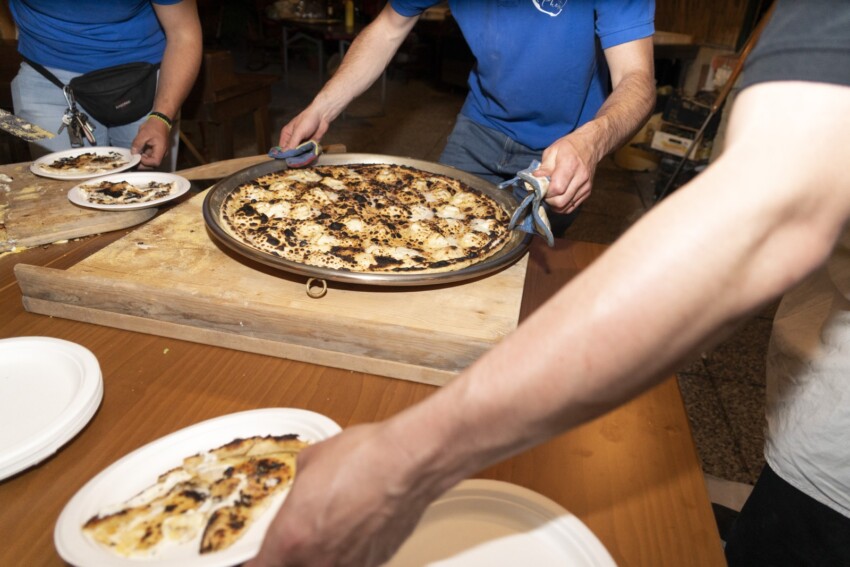
Genoese focaccia — known as fügassa in dialect — is the daily bread of Liguria: eaten at breakfast dunked in milk, as a mid-morning snack, or instead of bread at meals. It is not the soft, tall focaccia found elsewhere in Italy: it is thin, elastic, with an irregular surface of oil-filled dimples and a scattering of coarse salt, crispy outside and moist within. When well-made, it is one of the finest things in existence.
The most celebrated variant, and quite different from the original, is Recco focaccia with cheese: two paper-thin layers of unleavened dough wrapping a filling of prescinseua, the fresh curd typic to Liguria, or crescenza cheese. The result is a sheet that is both crispy and stretchy, cooked at very high temperature. Recco is the undisputed home of this preparation, and the place to taste it in its most authentic form, ideally straight from a wood-fired oven.
Dozens of regional variations exist: focaccia with onions is typical of Sanremo and the entire Ponente; sardenaria (or pizza all’Andrea) is a sort of red focaccia with anchovies, olives and garlic typical of the Imperia area; focaccia with Taggiasca olives is common along the entire Ponente Riviera. In every village the local bakery has its own version, and the best thing you can do is buy a piece in every settlement you visit.
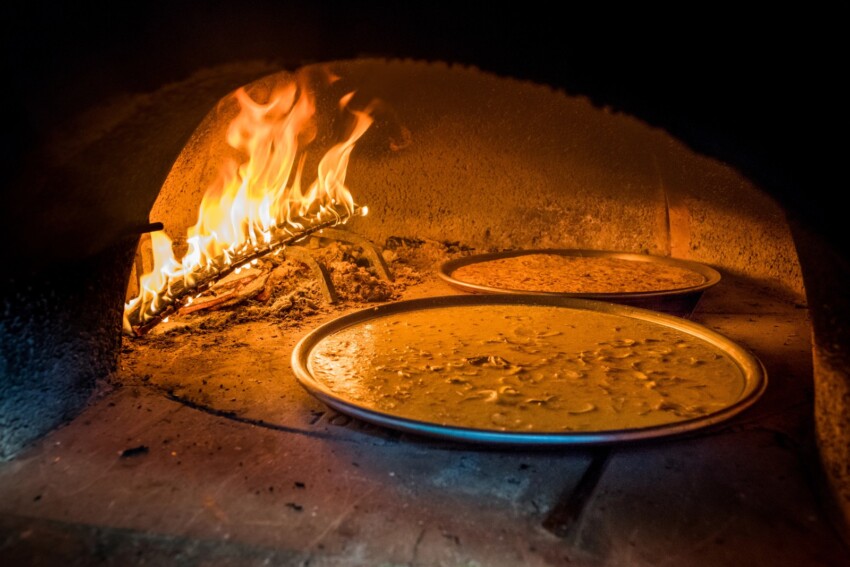
Farinata is a flat, thin disc of chickpea flour, water, extra virgin olive oil and salt, baked in a wood-fired oven at very high temperature in a large tinned copper pan. The result is a savoury cake without yeast, crispy at the edges and slightly soft at the centre, with a golden, chickpea-scented surface. It is eaten hot, straight from the oven, and tradition dictates a generous grinding of black pepper on top.
Farinata is Liguria’s premier street food: sold in chip shops and takeaway bakeries, often alongside similar preparations. In Savona there is a thicker, softer version called farinata bianca, made with wheat flour instead of chickpea flour. In La Spezia you’ll find it as the base for panigacci, thin chickpea focaccias served with cheese and cured meats. In the Imperia hinterland they prepare testa di turco, a variation enriched with onion.
The best places to eat it are the farinotteries (or sciamadde) in Genoa’s old town: narrow, smoky establishments where the wood-fired oven runs at full throttle from dawn. Look for the queues — where there are Genoese waiting, the farinata is good.
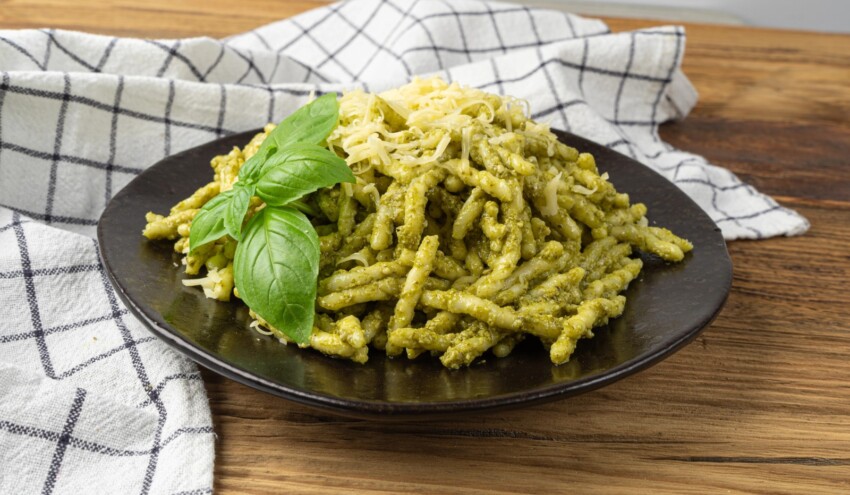
Ligurian pasta is almost always fresh and almost always paired with pesto, but the repertoire of first courses is far greater than one might think. Trofie are the most iconic format: small cylinders twisted upon themselves, hand-worked by pressing a piece of dough on the work surface with the palm and rolling it. Originating from around Sestri Levante, they are now found throughout the region and are the best pasta shape for trapping pesto in their spirals.
Trenette are the other symbolic pasta: flat spaghetti, similar to linguine but thicker, traditionally served with pesto alongside potatoes and green beans, or with a dressing of beans, anchovies and tomato. Pansotti are ravioli filled with a mix of wild herbs (preboggión) and prescinseua, dressed with walnut sauce — walnut butter, garlic, breadcrumbs soaked in milk and oil: a whitish, intense sauce unlike anything found outside Liguria.
In the hinterland of La Spezia province you’ll find testaroli, considered by many to be the ancestor of Italian pasta: small discs made from a batter of flour, water and salt cooked in terracotta pans, then briefly boiled and dressed with pesto or chopped herbs. They are a gastronomic rarity worth seeking out actively, as you won’t find them outside Lunigiana. In Sarzana and villages in the val di Magra they are still served in historic trattorie in the hinterland.
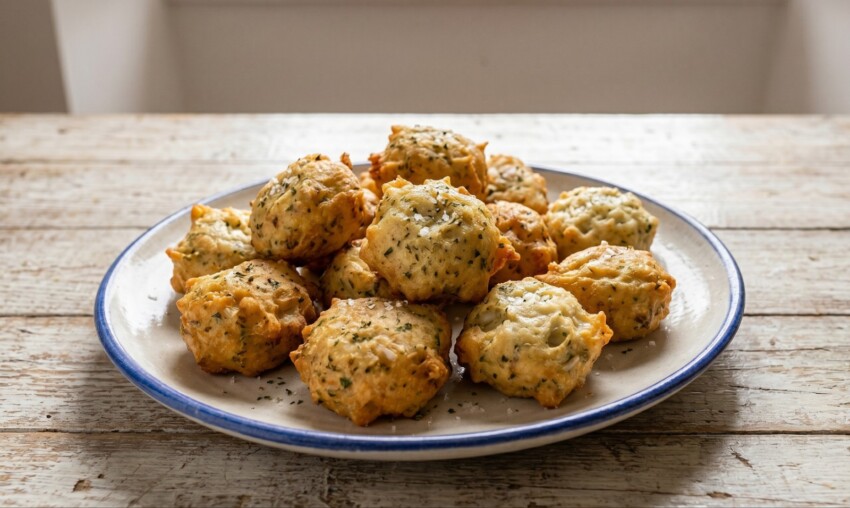
The tradition of Ligurian street food is ancient and deeply rooted, especially in Genoa, where chip shops (sciamadde) have animated the caruggi alleys of the old town for centuries. The most typical product is frisceu: light, puffy fritters of leavened dough with golden, crispy edges and an almost hollow centre. Eaten plain, still warm, or filled with anchovies or bianchetti (whitebait, now a protected product and harder to find).
Cuculli are the other indispensable delicacy: croquettes of chickpeas or potatoes seasoned with marjoram and pine nuts, fried in oil and served in paper. They are the traditional afternoon snack for Genoese children and the quickest way to understand what eating Ligurian means: no animal fats, aromatic herbs instead of spices, humble ingredients transformed into something precise and delicious.
In chip shops you’ll also find stuffed anchovies, one of Liguria’s most tasty appetisers: anchovy fillets opened like a book and filled with a mixture of parsley, garlic, egg and breadcrumbs, then fried in hot oil. The anchovies from Monterosso al Mare — hand-salted and preserved under salt in terracotta jars — are considered Liguria’s finest for their firm flesh and balanced sea salt: if you find them for sale, take a few jars home.
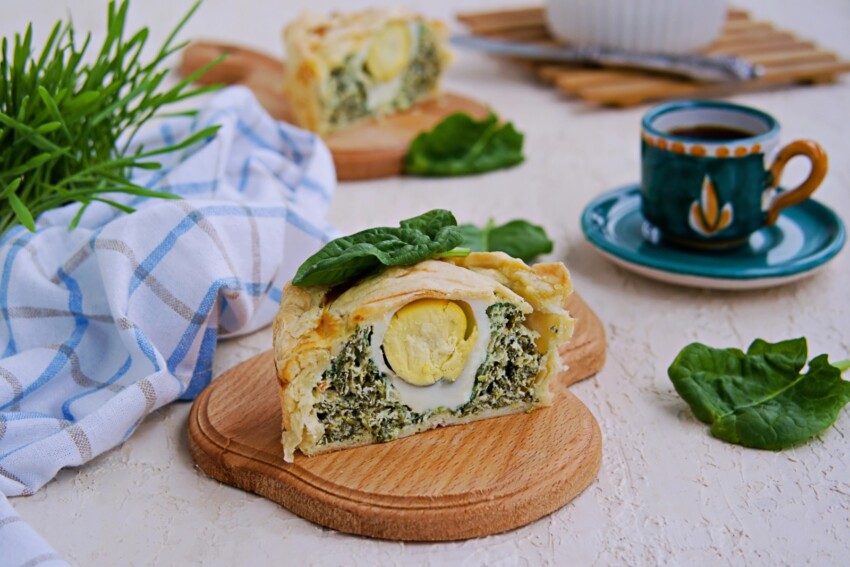
Liguria is one of the Italian regions where vegetable-based cuisine reaches its highest levels, not through fashion but through centuries of tradition. Savoury pies — simply called “torte” in Ligurian dialect — are preparations of puff pastry or shortcrust pastry filled with seasonal vegetables, eggs, fresh cheeses and aromatic herbs. Dozens of variations exist, changing from village to village and season to season.
The most famous is torta pasqualina, traditionally made at Easter: paper-thin layers of pastry (tradition dictates 33, in honour of Christ’s years) enfolding a filling of Swiss chard, prescinseua, marjoram and whole eggs that set firm inside the pie as it bakes. Slicing it and finding the eggs still whole is almost a ritual moment. It is found in delis throughout the region year-round, not just at Easter.
Equally widespread is borage pie, filled with this wild herb with blue flowers that grows on Liguria’s rocky slopes, and pumpkin and amaretti pie, typical of the hinterland. The Albenga artichokes — a purple late variety protected as a Slow Food Presidium — are the key ingredient in numerous local preparations: served stuffed, fried, Ligurian-style (stewed with garlic, parsley and oil) or as pie filling. You’ll find them especially at Albenga and surroundings, from March to May.
Ligurian seafood cuisine is not the exuberant, golden cooking of southern Italy: it is more austere, more rooted in the tradition of resourcefulness and simplicity of preparation. Fish is often baked with oil and Taggiasca olives, stewed with pine nuts and dried mushrooms, or served raw and marinated. The great fish dishes of tradition are elaborate preparations that paradoxically arise from humble ingredients.
Cappon magro is Liguria’s most theatrical fish dish: a layered construction built on a base of hardtack biscuits (hard sailor’s biscuits, softened in water) alternating boiled vegetables, fish and boiled shellfish, all bound together with a green sauce of parsley, anchovies, capers, pine nuts, garlic and oil. It was the dish Genoese sailors would prepare on the eve of feast days, using what they had on board. Today you’ll find it in historic trattorie in Genoa and in a few fish restaurants along the coast.
Buridda is a Genoese fish soup, more modest and less theatrical than Provençal bouillabaisse: various pieces of fish — typically cuttlefish, salt cod or mixed fish — stewed with pine nuts, dried mushrooms, olives, capers and tomato. Served with hardtack biscuits for soaking up the broth. Brandacujùn is instead a Ponente appetiser based on boiled salt cod and potatoes, worked together vigorously whilst hot with oil, garlic, parsley and pine nuts until reaching a rustic, savoury cream. The dialect name — alluding to the shaking action — is untranslatable without losing something in the process.
In La Spezia and its gulf, seafood tradition takes on a different form: stuffed mussels Spezzina-style are filled with a mixture of meat, Parmigiano, eggs and seasonings, then cooked in tomato sauce. The Spezzina mussels, farmed in the gulf’s waters, are a variety with tender flesh and particularly delicate flavour, considered among Italy’s finest. In Lerici and Tellaro waterfront restaurants serve them raw, steamed or gratinéed.
Meat is not the star of Ligurian cooking, but the few meat dishes that tradition has preserved over time are of exceptional quality and possess a distinct character. The most important is cima ripiena alla genovese: a cut of veal belly scored to form a pocket, then stuffed with an elaborate filling of eggs, peas, sweetbreads, brains, mushrooms, marjoram and Parmesan, sewn up and simmered for hours in water aromatic with celery, carrot and onion. The result is a compact meatloaf that’s sliced and served at room temperature, often as an antipasto in traditional delicatessens. It’s one of those dishes that Genoese people adore deeply and that simply doesn’t exist outside the region.
Rabbit alla ligure is the most common meat main course in restaurants along the coast: rabbit is browned with garlic and rosemary, then braised in white wine with Taggiasca olives, pine nuts and thyme. The Taggiasca olives — small, fleshy, with a fruity and almost sweet flavour — completely transform the dish compared to any other version of braised rabbit. In Taggia, the town that gives these olives their name, this dish is a staple in every inland trattoria. In the Imperia area you’ll also find versions with aromatic herbs from the Ligurian Alps — wild thyme, fresh marjoram, mountain oregano — that add complexity to the dish.
Ligurian pastry-making lacks the baroque richness of Sicilian confectionery or the butter abundance of Piedmontese tradition, but it has its own identity made up of dry, fragrant biscuits designed to last — conceived too for the long sea voyages. Pandolce genovese is the most representative pudding: a semi-sweet bread enriched with raisins, candied peel, pine nuts and fennel seeds, leavened for a long time, compact and aromatic. There are two versions — tall (made with natural yeast, moist and airy) and flat (without yeast, crumbly and dense) — and the dispute between supporters of the two schools is as old as the pudding itself. Traditionally it’s the Christmas pudding, but you’ll find it year-round in Genoese pastry shops.
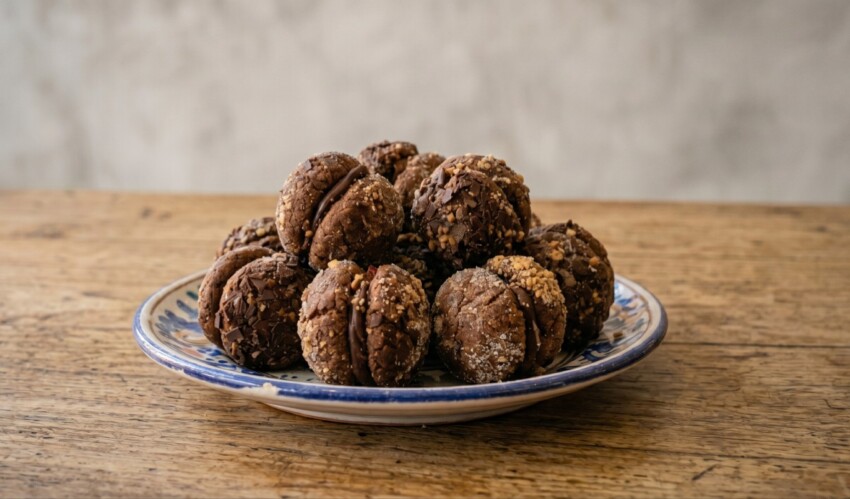
Canestrelli are daisy-shaped biscuits with a hole in the centre, crumbly and fragrant with lemon, made with flour, butter, icing sugar and hard-boiled egg yolks. Those from Torriglia, in the Genoese hinterland, are considered the most authentic and have Slow Food Presidium status. Alassio‘s baci are hazelnut and cocoa pralines, filled in pairs with a dark chocolate ganache: they were created in 1919 at Café Balzola in Alassio and are now a symbol of Western Riviera pastry-making. Sacripantina is a Genoese pudding shaped like a dome, made of layers of sponge cake soaked in alchermes and filled with buttercream: you’ll find it in the historic pastry shops of Genoa’s old town.
Riviera Ligure DOP extra virgin olive oil is the condiment that unifies the entire regional cuisine. Produced from the Taggiasca cultivar in the Flower Riviera and Western Savona, and from different cultivars in the Eastern Riviera, it’s an oil with a delicate, fruity aroma, low acidity and a sweetness that makes it perfect for drizzling raw over fish, boiled vegetables and soups. Buying a bottle directly from a mill in the Imperia hinterland — the harvest season runs from October to December — is one of the cleverest gastronomic souvenirs you can bring home from Liguria.
Ligurian wines are little known outside the region but of excellent quality: Vermentino and Pigato from the Western Riviera are mineral and fruity whites, perfect with fish; Sciacchetrà from Cinque Terre is a rare and precious dessert wine made from dried Bosco, Albarola and Vermentino grapes, amber in colour with notes of fig, apricot and honey — to pair with puddings or savour alone as a meditation wine. Reds are rare, but Rossese di Dolceacqua, produced in the hinterland of Ventimiglia around the village of Dolceacqua, is an elegant, fragrant wine worth seeking out.
A final mention goes to mesciua, the humble soup of La Spezia: chickpeas, beans and spelt or wheat simmered separately then mixed in a bowl with generous extra virgin olive oil, salt and pepper. It was born from grains that port workers would collect from sacks that fell from ship cargo, and today it’s a dish that La Spezia restaurants serve with pride as a symbol of local cuisine. It’s one of those dishes that don’t impress at first sight but that, when tasted in the right season — in autumn and winter — linger in the memory for a very long time.

 Hotel
Hotel  Budget accommodations
  Apartments
  Family Hotel
  Luxury Hotel
  Resorts