Hotel Le Grazie
Portovenere - Via Roma 43
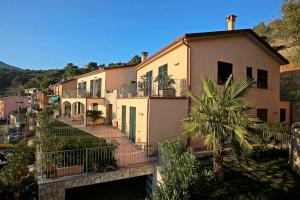
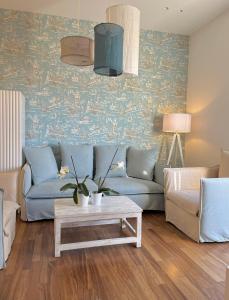
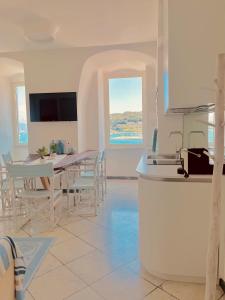
Located 4 km from Portovenere centre and only 300 metres from rocky beaches, Hotel Le Grazie offers air-conditioned rooms with satellite flat-screen TV.
Book now
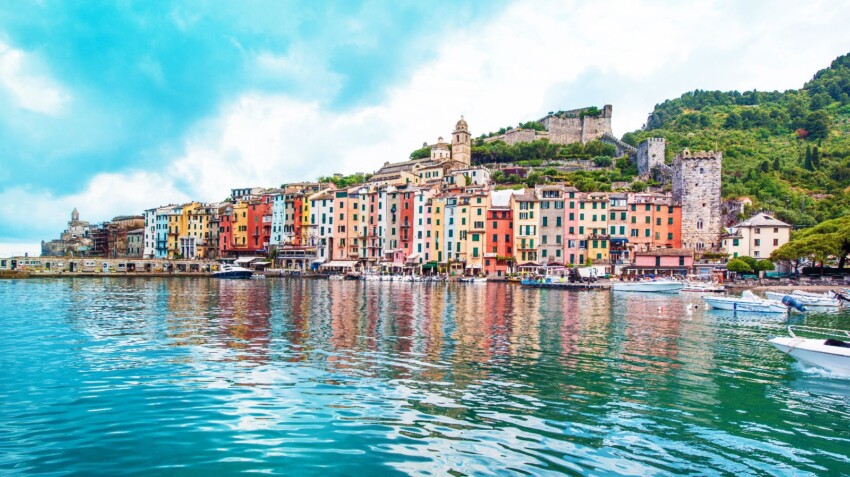
Roughly halfway between the romantic villages of Cinque Terre and the fashionable beaches of northern Tuscany lies another jewel of Italian tourism: the charming town of Portovenere (or Porto Venere).
It’s a gem nestled at the western tip of the Gulf of La Spezia, kissed by Liguria’s stunning blue sea, deep and teeming with life. You needn’t dive beneath the surface to admire its reflections and infinite shades of blue: simply take a boat trip to the nearby islands of Palmaria, Tino and Tinello or hop on a ferry to other famous spots in the area.
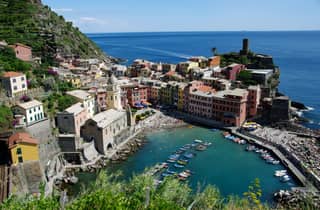
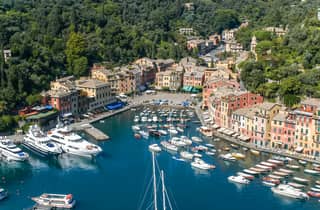
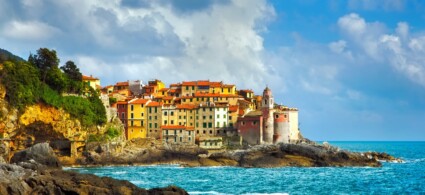
Portovenere has little to envy from Cinque Terre. Here too, the traditional houses are tower-houses with yellow, pink and red facades, lined up along the seafront like a protective barrier. There’s a characterful little harbour, an austere fortress, an atmospheric dark stone church perched dramatically on the rocks, narrow alleyways and steep staircases revealing hidden squares and picturesque corners, caves and crevices carved into the rocky coastline. And there are charming fish-and-chip shops and excellent seafood restaurants.
Beloved and celebrated by great English Romantic poets who visited in the nineteenth century, Portovenere is an ideal destination for a romantic getaway in Liguria, yet it’s also surprisingly suited to active holidays. Diving in deep waters just metres from the shore, climbing sheer white cliffs overlooking the sea, trekking through green hillsides: there’s no shortage of options for those who can’t sit still.
A seaside break focused purely on relaxation? Yes, that’s possible too. And you can also use Portovenere as a base for exploring the Riviera di Levante.
Atmospheric buildings perched on the rocks, a striking row of façades, spectacular sea caves, monasteries defying inhospitable terrain, a street buzzing with shops and eateries, and beaches bathed in crystal-clear waters: Portovenere’s attractions will keep you busy for far more than half a day!
Take our advice: stay a little longer.
You can enter Portovenere’s historic centre from several points, but the most atmospheric is the Town Gate, the historic gateway through the medieval walls dating back to the twelfth century and still perfectly preserved.
Here begins the town’s main street, Via Capellini, a typical narrow cobbled lane flanked by tower-houses. Along the way you’ll find countless souvenir shops, fish-and-chip stands, focaccia bakeries and artisan workshops.
After browsing the shops and satisfying your hunger with a cone of fried fish, venture off the main street to lose yourself in the alleyways searching for charming little squares and romantic corners.
The defining characteristic of Portovenere is the “row of palaces“, a line of tower-houses squeezed together to form a kind of barrier between the narrow streets of the town centre and the sea.
Like typical Ligurian village houses, they rise vertically and feature brightly coloured walls. The best vantage point to admire them as a whole is the jetty, reached by turning right from the Aldo Moro promenade.
The evocative Church of San Pietro is one of Portovenere’s most iconic images. Perched dramatically on the rocks overlooking the sea at the tip of the promontory marking the southern edge of Portovenere, it seems to merge seamlessly with the stone.
It comprises two linked buildings, one Romanesque (the oldest) and one Gothic (constructed between 1256 and 1277). Its theatrical position, combined with a distinctive façade of alternating white and dark stone and a commanding bell tower, makes it truly unique.
For those arriving by ferry from Cinque Terre, the Church of San Pietro is the first glimpse of Portovenere. It’s stunning from the water and also an excellent viewpoint from which to gaze across the blue expanse of the Mediterranean; the loggia offers the best views.
The Castello Doria at Portovenere, not to be confused with its namesake in Vernazza, is an imposing defensive fortress built on the hill overlooking the historic centre.
Austere in appearance, it’s a pentagonal fortress comprising two separate structures (one lower, one higher) which together form what appears to be a solid mass and represents a typical example of Genoese military architecture.
The castle is open to the public. Although there’s little to see inside, we recommend a visit: entry costs just a few euros and from the parapet you can reach a terrace with stunning sea views.
Along the uphill path to the castle you’ll spot two cylindrical towers, originally used as mills and later as lookout posts.
One of Portovenere’s best-known attractions is the Grotta Arpaia, a natural cave carved into the cliffs below the castle. It’s said that the English poet Lord Byron was deeply attached to this spot, where he would come to calm his restless spirit and find inspiration for his immortal verses: it’s become famous as Byron’s Grotto for this reason.
Near the Church of San Pietro, a stairway leads down to a small viewing platform where you can admire the cave.
A plaque set into the rock commemorates one of Byron’s legendary escapades, famous as he was for gruelling swimming races and other daring feats. The one recalled here is his swim from Portovenere to Lerici to visit his friend, the poet Shelley: thankfully, these days such exhaustion isn’t necessary—just hop on a boat!
The cave is a popular diving site, with depths ranging from 5 to 20 metres. Highly atmospheric, it presents no particular technical difficulties and is therefore suitable even for novice divers.
Along the walking route to Byron’s Grotto you’ll encounter Mater Naturae, a bronze statue created in 1989 by sculptor Raffaele Scorzelli depicting a plump seated woman.
Within the village, the finest religious building is the Church of San Lorenzo, constructed in 1130 and modified many times over the centuries.
The church houses numerous artworks, but one in particular has profoundly shaped Portovenere’s civic and religious life. It’s the painting of the White Madonna, which we might call legendary: according to local tradition, this masterpiece mysteriously arrived by sea inside a sealed tree trunk.
A must-do experience is the boat trip to the three islands lying opposite the village, which fall within the Portovenere Regional Park.
The largest and only one open to visitors is Palmaria Island. It’s small, just 6.5 square kilometres, but widely visited for its scenic beauty and is also a popular beach destination thanks to its crystal-clear waters. Those who enjoy walking can explore it on foot via one of many trails winding through dense Mediterranean vegetation.
The western side is steep and dramatic, with sheer cliffs reaching up to 188 metres where numerous caves open out—locally called balme in an ancient dialect (hence the island’s original name, Balmaria, later changed to Palmaria). The finest of these is the Grotta Azzurra, a must-see on any boat tour of the island. The eastern shore, by contrast, slopes gently towards the sea.
Two small villages, Terrizzo and Pozzale, sit on the island.
The Tino Island9 is not open to visitors as it’s a military zone, though you can see it during a boat trip without landing. Visits are only permitted on the feast of San Venerio, falling on 13 September, and the following Sunday.
The Tinetto Island10 is little more than a rocky outcrop, separated from Tino Island by a hundred metres of sea. Now uninhabited, it was once the home of a monastic settlement dating to the sixth century, with some ruins still visible.
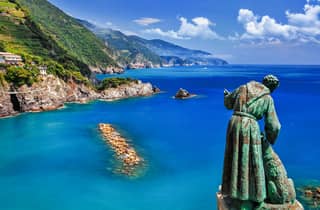
In the waters nearby stands a statue of Stella Maris that appears to rise from the sea. In fact it rests on a rock outcrop known as Scoglio del Diavolo (or Scogio do Diao in local dialect) and serves to warn sailors of a dangerous underwater shelf.
If you prefer peace and quiet, there’s a magical spot just 3 km from Portovenere’s centre where you can stroll undisturbed, admiring picturesque views and the lovely stretch of coast: it’s the Le Grazie district.
This characterful village nestles in a sheltered cove protected from winds and rough seas. Here too you’ll find a row of tower-houses with brightly coloured façades and a little harbour where fishermen’s boats and historic sailing vessels are moored. The atmosphere, however, is entirely different from central Portovenere: far more tranquil, this district remains deeply rooted in local traditions.
In the Le Grazie district stands the archaeological site of the Roman Villa of Varignano, where you can see the remains of a rustic villa with a seafront landing point, probably dating to the second century BC. The site preserves the oldest oil mill in Liguria.
A seaside holiday in Portovenere is wonderfully restorative: Liguria’s blue waters and the area’s magnificent landscape guarantee unforgettable hours of relaxation. Don’t expect long stretches of sand or secluded beaches, though.
Portovenere’s beaches, rather like much of Liguria, are small and consequently almost always crowded, except for little-known coves accessible only by boat.
When talking of beaches in Portovenere, one generally means rocky areas or small terraced platforms where you can lay a towel and enter the water via steps. The closest equipped beach to the centre is the Arenella12, while for a free beach head to the Olive Beach13.
For larger beaches, follow the locals’ example and head to Palmaria Island. The island’s two best-known beaches are Punta Secco Beach14 and Pozzale Beach15.
The first is a free beach near Punta Secco mixing sandy and shingly stretches; it’s backed by maritime pines offering perfect shade when the heat becomes intense. Pozzale Beach is an equipped beach on the island’s western side.
Also not to be missed, if you can, is the stunning Cala Fornace, tucked between dramatic cliffs. It’s only accessible by sea.
The area is a true paradise for diving and snorkelling enthusiasts: the most popular sites for these water sports are Secca di Dante, Parete del Tino, Grotta del Tinetto, Secca del Tinetto and the aforementioned Byron’s Grotto.
In the following map you can see the location of the main places of interest mentioned in this article.
Portovenere is a well-established resort with a firmly rooted tourism tradition. For your stay in Portovenere you’ll find a vast range of accommodation: from modern lofts to simple guesthouses, through homes set in greenery, rooms and apartments with sea views, residences and even boat&breakfast options for those wanting the thrill of sleeping on a boat.
Hotels and guesthouses are mostly mid-range: there are no budget or ultra-luxury options, with the sole exception of a stunning 5-star Grand Hotel housed in a seventeenth-century monastery overlooking the harbour.
Portovenere’s hotels and bed & breakfasts are concentrated in the historic centre, with a few options in the Le Grazie district.
We offer a selection of hotels at Portovenere to suit all categories of travellers. The most booked by tourists are the sea-facing hotels, often right on the beach. If you want to play it safe, choose one of the following: they are among the most booked hotels in Portovenere, sorted by number of reviews.
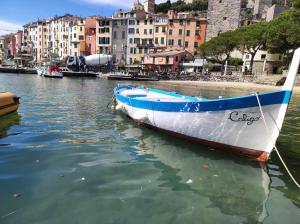
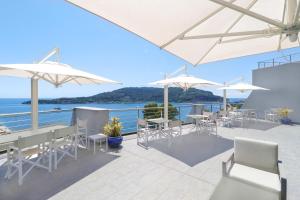
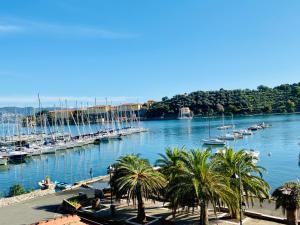
If you prefer space, privacy and the ability to prepare your own meals to a hotel holiday, book a holiday home at Portovenere. We recommend a few below, but in this case we advise you to book early because houses and apartments for rent at Portovenere are in high demand.
The simplest way to reach Portovenere is to take a local bus departing from La Spezia’s centre; services are frequent and the journey takes around 30 minutes. You can reach La Spezia by train or by car using the A12 motorway (Genoa/Livorno) or the A15 (La Spezia/Parma).
It’s not possible to reach Portovenere by train as the town has no railway station. We don’t recommend driving, as parking is insufficient for the high volume of visitors and all spaces are paid; if you want to try, once you exit the motorway at La Spezia, follow the winding provincial road 370 towards Portovenere-Cinque Terre.
Another way to reach Portovenere is by ferry: slower and pricier than the bus, it’s far more atmospheric. Ferries to Portovenere operate from spring through early autumn, departing from numerous locations across Liguria and northern Tuscany including La Spezia, Lerici, Levanto, Viareggio and Cinque Terre villages.
What's the weather at Portovenere? Below are the temperatures and the weather forecast at Portovenere for the next few days.
Portovenere is a municipality in the province of La Spezia, located approximately 13 km from the provincial capital.

 Hotel
Hotel  Budget accommodations
  Apartments
  Family Hotel
  Luxury Hotel
  Resorts