Hotel Due Gemelli
Riomaggiore - Via Litoranea, 1, SP370
Hotel Due Gemelli is set among pines and vineyards, on a hill overlooking Riomaggiore in the Cinque Terre.
Book now
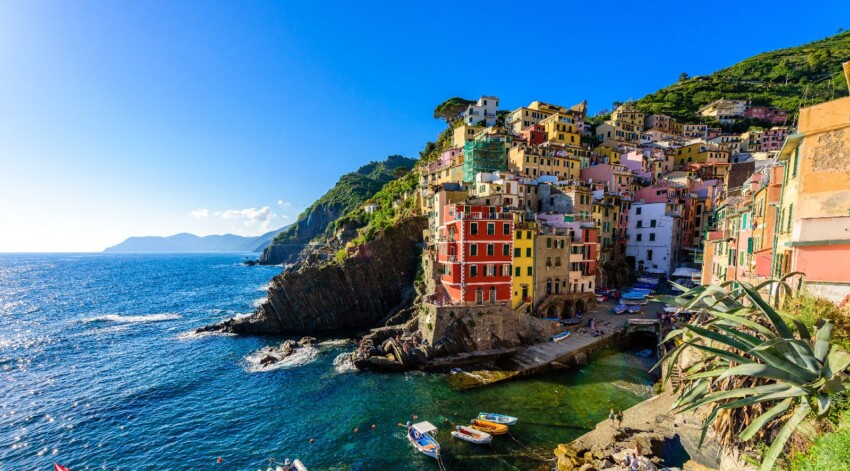
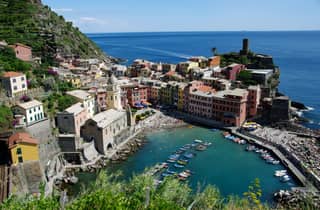
Riomaggiore is the easternmost of the villages of the Cinque Terre and for most visitors it represents the gateway to this distinctive territory, the pride of Liguria and Italy as a whole. You’re starting off in style, quite literally, with this little village of tower-houses clinging to the sea and perched against the mountainside, the envy of the world.
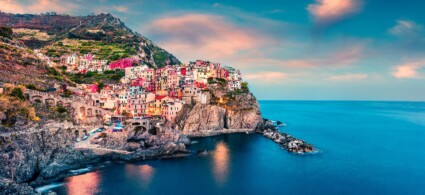
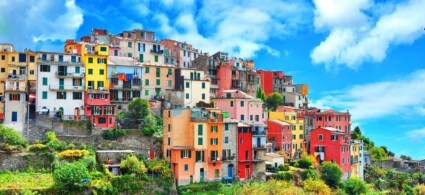
The historic centre, squeezed between two terraced hillsides, is a fascinating jumble of narrow lanes, staircases, passageways and hidden corners; there are no famous museums or monuments here—the real attraction is the uniqueness of this little town and the palette of yellows, pinks and reds of its buildings, which perfectly complements the infinite shades of blue and green of the sea.
The painter Telemaco Signorini, an important figure in the Macchiaioli movement, attempted to capture the splendour of these colours and the interplay of light and shadow created by the recesses of the buildings on canvas. The result is accomplished, but it cannot compete with reality: the emotion of seeing Riomaggiore in all its breathtaking beauty is incomparable.
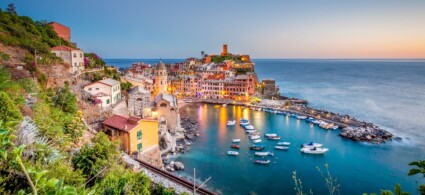
The famous Via dell’Amore that starts from Riomaggiore is currently closed, but there are endless ways to fall head over heels in love with this village. Sitting and watching the boats arriving or leaving from the little harbour, or falling asleep to the gentle sound of waves breaking against the rocks is enough to make you never want to leave.
Riomaggiore is ideally divided into three zones: the station area, where the Via dell’Amore begins; the old town and the jetty (departure point for the ferries); a tunnel separates the station area from the other two. Things to see are scattered throughout the village.
An excellent vantage point from which to view the village from above is Riomaggiore Castle, dramatically positioned at the top of a hill overlooking the sea. If you’d rather skip the walk uphill, you can reach it by bus.
Built in 1260 and completed between the 15th and 16th centuries, it is a quadrangular fortress comprising a defensive wall with two circular towers; today it is used as a venue for events and performances.
Near the castle is the Oratorio di San Rocco, built in the late 15th century as the town’s thanksgiving for escaping the plague.
Another historic building in the upper part of Riomaggiore is the Church of San Giovanni Battista, dedicated to the town’s patron saint.
Built in 1340, it has a three-aisle basilica layout. It is not a monumental church, but worth noting are its Gothic doorways, the 14th-century rose window and some artistic works housed inside, including a wooden crucifix by Maragliano and a triptych by Benedetto Antelami.
The Torre Guardiola, called “Batteria” by locals, is a defensive structure built to protect Riomaggiore’s coast from attacks by Saracen pirates.
Until 2010 it housed an Environmental Education Centre for the Cinque Terre National Park and is scheduled to reopen under an agreement between public authorities and private entities.
“The sequence of memory” is a mosaic made of majolica tiles and other materials (stones, marbles, crystals, shells, terracotta pebbles, mirrors) stretching 157 metres and depicting the Cinque Terre coastline.
Created by Argentine-born Italian artist Silvio Benedetto, the work decorates the pedestrian gallery that runs from the station to the historic centre.
The same artist is responsible for the murals depicting the hard work of farmers, also in Riomaggiore, and for other works in the other Cinque Terre villages.
A peaceful spot surrounded by greenery and an exceptional viewpoint, the Sanctuary of Nostra Signora di Montenero is reached from Riomaggiore only on foot (with an uphill climb!) but it more than rewards you for your effort.
Located at 340 metres above sea level, it offers a breathtaking view of the Ligurian Sea and the nearby villages.
This evocative sanctuary was probably built in the 14th century, but its present appearance dates from the 19th century. Inside it houses an image of the Assumption of the Virgin Mary which, according to local legend, was brought here in the early Middle Ages by Greek refugees; it is probably a more recent work, dating to around the 16th century.
The villages of Manarola (listed among the Cinque Terre), Groppo and Volastro are also part of Riomaggiore’s municipal territory. They can be reached on foot, by car or by bus and are worth a visit.
Riomaggiore is one of the most visited locations in the Cinque Terre and offers the widest variety of things to do.
In addition to romantic walks through the village, beach relaxation and countryside hikes, you can enrich your Riomaggiore holiday with boat tours, wine tastings, courses in pesto or homemade pasta preparation, kayaking trips and photography tours.
The only Riomaggiore Beach6 accessible by land is a pebbly beach located at the eastern edge of the village, not far from the little harbour. It is also called the Fossola beach or the Guardiola beach because it is overlooked by the tower of the same name which once housed a natural history observation centre.
It is quite large compared to other Cinque Terre beaches; it has no lidos but does have showers. It is not recommended for families with small children as swimming can be dangerous in rough seas.
A splendid beach not far from Riomaggiore is Canneto, located between Punta Castagna and Punta del Cavo. It is only reachable by boat and is famous for a waterfall of fresh water that cascades down from the hillside.
The Cinque Terre is a paradise for walkers and Riomaggiore is no exception. The village is the starting point of the famous Via dell'Amore7, the most famous—and in some say most beautiful—section of the Sentiero Azzurro, which connects the Cinque Terre villages. Unfortunately, due to a landslide in 2012, the path is largely closed.
A trail suitable for everyone is the Riomaggiore loop, 3 km long and covering it takes about an hour to an hour and a half. You partly follow the SVA-593 trail (formerly trail 3) which runs from Riomaggiore to the Montenero sanctuary and partly the 593V (formerly 3A) which visits the same areas but is shorter and steeper. It’s recommended to walk the loop clockwise.
A longer trail but with no particular technical difficulties, much loved by tourists, is the one to Portovenere. It is a 12 km trail (one way, taking about 5 hours) that stays fairly close to the coast and intersects other trails leading to small villages or beaches.
To walk the trails safely, regardless of your level, you need to wear proper footwear. No sandals or flip-flops!
In the following map you can see the location of the main places of interest mentioned in this article.
There is a good choice of accommodation in Riomaggiore. In the historic centre you will find many bed & breakfasts, guesthouses and holiday apartments plus a couple of hotels. They are mostly mid-range properties, around 3-star level: there are no budget options or super-luxury ones.
The average price of a room in Riomaggiore is high, but the quality of accommodation, considering standards of cleanliness, comfort and charm, is generally very good.
Although one of the largest villages in the Cinque Terre, Riomaggiore is easily navigable on foot and therefore there is no particular area recommended where to stay.
We offer a selection of hotels at Riomaggiore to suit all categories of travellers. The most booked by tourists are the sea-facing hotels, often right on the beach. If you want to play it safe, choose one of the following: they are among the most booked hotels in Riomaggiore, sorted by number of reviews.

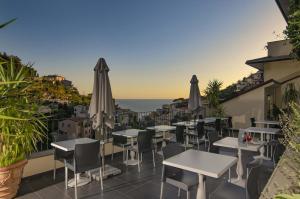
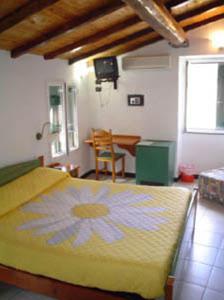
If you prefer space, privacy and the ability to prepare your own meals to a hotel holiday, book a holiday home at Riomaggiore. We recommend a few below, but in this case we advise you to book early because houses and apartments for rent at Riomaggiore are in high demand.


To reach Riomaggiore by car, take the A12 motorway, exit at the Santo Stefano di Magra junction and follow signs for La Spezia, Cinque Terre, Riomaggiore and Portovenere, then take the road to Riomaggiore.
Be aware, however, that cars are not allowed in the village for non-residents. You will have to leave your car in a paid car park outside the historic centre and continue on foot; about 2 km away there is a free car park, accessible by public transport.
Both the paid car parks near the centre and the free one further away are always extremely crowded, which is why arriving by car is not recommended.
Much more convenient is to take the train: Riomaggiore station is on the Genoa-La Spezia railway line, served by numerous regional trains. The journey from La Spezia to Riomaggiore takes only 8 minutes. During the summer months, local trains on the 5Terre Express line are also in service.
Another way to reach Riomaggiore is by ferry. Arriving by sea is more expensive and slower, but it is also a fascinating journey that allows you to admire the Riviera di Levante coast and Riomaggiore village as a whole. Ferries to Riomaggiore can be taken from La Spezia, Portovenere, Manarola, Vernazza, Monterosso and Levanto.
From Riomaggiore you can easily reach the other Cinque Terre villages by train or ferry (except Corniglia, which is only accessible by train).
What's the weather at Riomaggiore? Below are the temperatures and the weather forecast at Riomaggiore for the next few days.

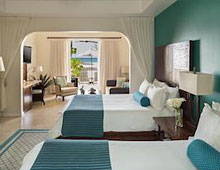 Hotel
Hotel  Budget accommodations
  Apartments
  Family Hotel
 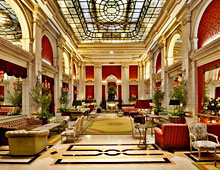 Luxury Hotel
  Resorts