La Stregatta
Triora - Via Camurata 24
Book now
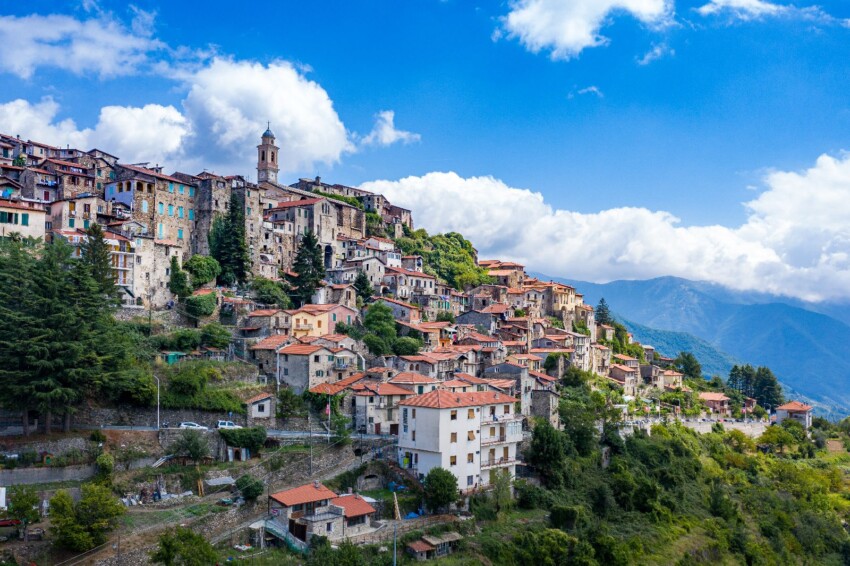
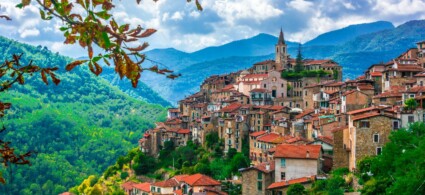
Nestled in the enchanting natural setting of Valle Argentina and wrapped in complete silence lies Triora, a mountain village with an arcane power and a distinctive atmosphere that straddles the dark and the romantic.
Known as the Village of Witches or Italy’s Salem, Triora is considered an unmissable destination for anyone drawn to magic, the occult, witch hunts and everything connected to them. In truth, it doesn’t matter whether you’re a devoted enthusiast, simply curious, or someone who jumps at shadows and creaking doors – this small town at the edge of western Liguria will enchant you without any need for magical potions because it is, without question, one of Italy’s most beautiful villages.
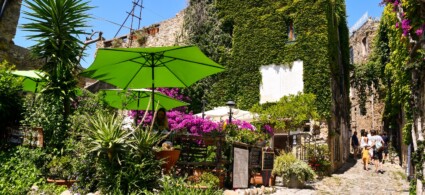
Reached via a winding uphill road, the centre has the typical appearance of a medieval village perched on a hilltop, complete with narrow streets, alleyways, stone archways and small squares. What makes it special are witches and black cats that appear almost everywhere, as images adorning statues, doors, balconies and postcards, or as names of inns and bed and breakfasts.
Typical souvenirs from Triora include amulets, lucky stones, magical potions that work or don’t depending on how much you believe, and a Witch’s Filter that actually works for everyone because it’s a delicious handcrafted herbal liqueur. Witches are also celebrated through the town’s most important events: Strigora in August and Halloween at the end of October.
Yet whilst the stereotypical image of the village involves dimly lit passages, dark corners and caves that would be perfect for horror films, cottages where you can still seem to hear the screams of women accused of witchcraft, Triora is also romantic vistas, elegant mansions, ornate slate doorways, fountains, imposing churches, tiny chapels hidden in the woods and panoramic views over magnificent natural landscapes.
Come without fear: Triora is a destination for everyone. A place with its own inexplicable harmony made of light and shade: devotion and sacrilege, brightness and darkness, historical documents recounting terrible events alongside whimsical references to the world of witches for children. You choose what kind of holiday you want to have!
You cannot present Triora’s tourist attractions without discussing the tragic historical events that took place between 1587 and 1589, which shaped the town’s history and identity.
During those years, several local women were accused of witchcraft – experts in traditional herbs, midwives and healers whom residents consulted for health matters. Subjected to an extremely harsh trial, they were imprisoned and tortured in order to confess their alleged crimes and name their supposed accomplices.
The “witches” were considered primarily responsible for the terrible famine that had struck the town. They were also accused of having pledged their souls to Satan in exchange for malevolent powers and of practising cannibalism against local children.
The defendants were all women of low social status, but the tragic events of the trial eventually involved members of the nobility as well. After three years, the trial concluded with five death sentences; those women who escaped the flames fared no better, their lives forever marked by this painful episode.
The trial left Triora not only with sinister locations that have become tourist attractions, but also with a whole series of customs and beliefs that survive in the daily life of its citizens (including a rather bizarre religious ceremony against caterpillar infestations), a surprising number of sacred reliquaries and images, and extensive use of sacramentals such as blessed water, salt, oil, incense and candles.
Most tourists visiting Triora are solely interested in attractions linked to the witches, but the small historic centre and its immediate surroundings concentrate many things to see, not all of them related to the trials of the late sixteenth century.
Welcoming tourists to Triora is a special hostess: a witch, naturally. It’s a bronze statue depicting a woman with a cauldron and wicker broom offering a cup – with a touch of imagination you can see a witch offering you a magical potion.
Triora’s most famous attraction is the Ethnographic Museum and Museum of Witchcraft, a very distinctive local history museum that’s absolutely not to be missed.
A visit to this museum is a journey through the village’s rural traditions and the beliefs and historical events that made it famous. Walking through 15 rooms spread over three floors, you’ll experience a rollercoaster of emotions, ranging from romantic nostalgia for simple living close to nature to shivers of terror as you relive the darkest period in Triora’s history.
The MES was conceived as a temporary exhibition by local historian Father Francesco Ferraironi and transformed into a permanent museum in the elegant setting of Palazzo Stella thanks to the efforts of citizens devoted to their territory. The aim, perfectly achieved, was to present authentic testimonies of past life in order to preserve their memory forever.
The part of the visit most loved by tourists begins when you descend into the basement: once the site of the town’s prisons, it now hosts the museum’s witchcraft section.
These dark and somewhat unsettling spaces are the perfect setting to host the story of the tragic witch trial that took place in the sixteenth century through authentic historical documents and reconstructions of scenes from the daily lives of the women accused of witchcraft and their interrogations.
Leaving this atmosphere of terror behind, you can rediscover light and joy of living in the museum’s garden, browsing among plants and miniatures of the village.
Another spine-tingling attraction in Triora is the Cabotina, also known as the Witches’ Refuge. It is nothing more than an old stone mountain cottage, rather like a cave: it’s quite nondescript in itself, yet it arouses great interest among tourists, drawn by its mysterious and somewhat sinister appeal.
Local belief holds that the witches involved in the historic trial gathered here. Visiting this place, often shrouded in mist, some visitors feel electrified at the thought that magical potions and spells were created here, whilst others think of the torture and persecution suffered by the women accused of witchcraft and feel sorrow.
It’s certainly a place worth seeing for its distinctive atmosphere. A single glance at the splendid natural setting in which the cottage sits will reassure you and dispel any unease.
If you’ve had enough of terror and magic, take refuge in the relaxing atmosphere of the Country Church of San Bernardino, a fifteenth-century chapel nestled in the greenery of a hillside just outside the village.
It’s a delightful stone construction with a portico of arches; inside it houses wonderful frescoes and other precious works of art, but visitors love it especially for its harmonious fusion with nature.
Triora’s Collegiate Church is a magnificent church with a neoclassical facade, built over a primitive three-aisled church in the town’s historic centre.
The interior is enriched by numerous works of art, including a 1397 painting depicting the Baptism of Christ. The church also houses a black cross and two statues carried in procession to Mount of the Gallows on the second Sunday after Easter – a fourteenth-century Christ and the sculptural group of the Madonna of Mercy created in 1841.
Behind the church’s apse is a grotto dedicated to Our Lady of Lourdes.
Little remains of the ancient fortifications erected to defend the village: there were five, and today almost all are destroyed. You can see the remains of an ancient castle with a fort used as a burial ground from the second half of the nineteenth century, and the remains of the Fort of San Dalmazzo, now topped by a church.
Though little remains, the castle ruins are evocative and give a sense of its former majesty.
Triora is a town with a long history that cannot be summed up in its most famous attractions. The centre and nearby hamlets are brimming with mansions, churches, fountains, monuments and distinctive places that recall a historical episode or local curiosity.
The best way to find all the town’s points of interest is to follow one of three walking routes designed to showcase the historical, artistic and ethnographic richness of this unique village:
Those who don’t visit Triora for the witches come for nature: the village falls within the territory of the Ligurian Alps Park, a protected area in western Liguria squeezed between the French border and southern Piedmont.
The park encompasses three valleys: the Nervia stream area, the Upper Argentina Valley (where Triora is located) and the Upper Arroscia Valley. You can move from one valley to another via trails, secondary roads and unpaved paths that offer magnificent panoramic views of woods, mountains and sometimes even the sea.
Of the three valleys, the Upper Argentina Valley is the wildest: the terrain presents steep slopes, villages perch on ridges or rocky outcrops, and nature reigns unchallenged.
Triora is an ideal base for exploring this marvellous park, still far removed from the most well-trodden tourist routes. Trekking and mountain biking trails start from or pass through here, but if you find them too challenging, you can admire the beauty of nature from your bed and breakfast’s terrace.
Once you reach Triora, don’t stop at the historic centre. It’s worth seeing the nearby villages too, including Corte6, Andagna7 and Molini di Triora8. The latter hamlet is known for its bread, still made today in communal ovens according to a traditional recipe.
In the following map you can see the location of the main places of interest mentioned in this article.
The name Triora comes from the Latin “tria ora” meaning three mouths. The town’s coat of arms depicts Cerberus, the three-headed mythological figure, but the three mouths referenced in the town’s name could indicate the three main products of the local economy (wheat, chestnut, grapes) or the three rivers that converge in the valley where Triora stands.
If you want to fully appreciate the mysterious charm of this unique village, we strongly recommend staying in Triora for at least one night.
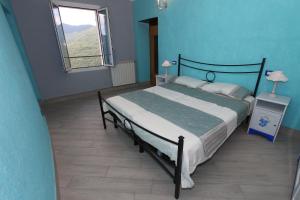
Accommodation in Triora’s centre consists of delightful bed and breakfasts, apartments and holiday homes with evocative names, almost all linked to witches and magic. They’re often housed in historic stone buildings and feature charming details such as slate portals, period furniture and exposed beams; some also have splendid panoramic terraces.
There are no hotels in Triora, but you can find a couple a few kilometres away in nearby villages. Keep in mind that the villages aren’t well connected by public transport, so you’ll need a car to visit Triora’s centre.
Triora is a small town, so there are no recommended areas to stay in as all accommodation is within short distance of each other. There are options for all budgets, but the choice isn’t extensive, so we recommend booking well in advance, especially if you’re travelling in summer or during the Halloween period.


Reaching Triora by car is quite straightforward: simply take the A10 motorway Genoa-Ventimiglia, exit at Arma di Taggia, initially follow directions for Taggia and then at the junction take the road for Triora. From Taggia to Triora is about 30 km, but allow at least 40 minutes as the road is a succession of bends.
Reaching Triora by public transport is complicated as it requires at least one change: you need to take a train to Arma di Taggia or Sanremo and then a local bus. Services are infrequent, so it’s advisable to check timetables before you leave.
Triora is a municipality in the province of Imperia located in the Upper Argentina Valley (western Liguria), approximately 60 km from the provincial capital and 40 km from Sanremo; Genoa is over 170 km away.
 Hotel
Hotel  Budget accommodations
  Apartments
  Family Hotel
  Luxury Hotel
  Resorts