Casa degli ulivi
Taggia - Regione Settemonti, 3
Book now
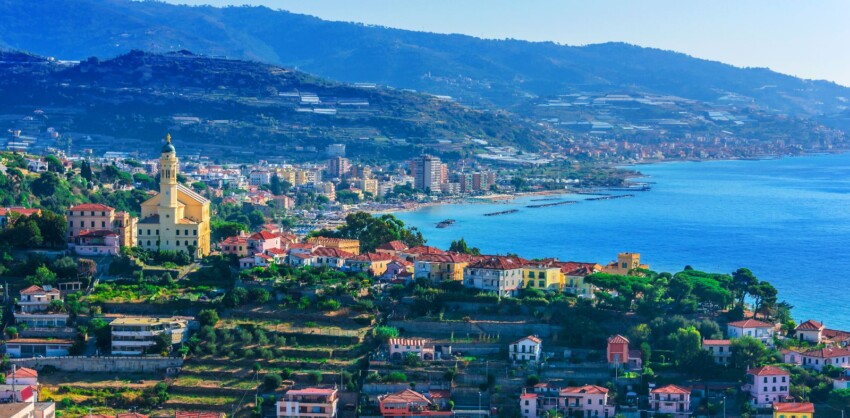
Taggia is a charming Ligurian town in the Riviera di Ponente that’s perfect for families and groups of friends who can never quite agree on where to go on holiday.
The town is split into two distinct areas: one devoted to food and wine tourism and culture, the other to seaside holidays. Add one of northern Italy’s finest cycle paths to the mix, and you’ve got pretty much everything you could want for a restorative break away.
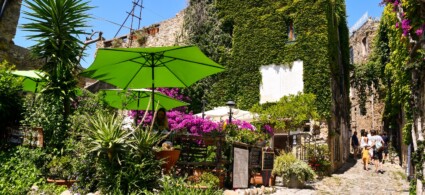
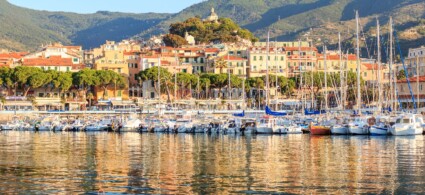
Taggia’s historic centre sits inland in the Valle Argentina, around 3 km from the coast, and is a network of parallel streets that developed over five centuries, from the 10th to the 15th century. Arma di Taggia, by contrast, is the maritime quarter—a traditional village that grew up behind a long sandy shoreline and has reinvented itself as a seaside resort, complete with equipped beaches and a small tourist harbour for mooring fishing boats and pleasure craft.
The real star of tourism in Taggia, however—the one thing that brings everyone together—is the taggiasca olive. Cultivated here for centuries, it produces gloriously fragrant oil and olives that any gastronome adores, appearing in everything from appetisers to Mediterranean-inspired dishes. Once you’re here, why not sample the other local specialities too: canestrelli (a sort of savoury fennel taralli biscuit) and figassa (focaccia topped with crushed tomatoes, anchovy fillets, olives and garlic).
Between swimming in Liguria’s crystalline waters, aperitivos and mouthwatering dinners, pleasant strolls through the village, a day trip to Sanremo and cycling along the coast, a holiday in Taggia simply flies by. Before long, you’ll find yourself dreaming of returning.
In Taggia’s historic centre and its immediate surroundings, there are a couple of interesting cultural and natural attractions.
Taggia’s most celebrated attraction is the evocative Ponte Antico, a stone bridge with 15 arches spanning a total length of 275 metres.
Some guides refer to it as a Roman bridge, but it actually dates only to the 13th century, making it a medieval bridge. The oldest section was built on the left bank of the Argentina stream, and the bridge was later extended in the 17th and 18th centuries as the watercourse shifted; two arches were rebuilt in 1833 after an earthquake.
From the bridge’s distinctive stone benches, you can take in panoramic views across the hills or the valley. As you walk across, you’ll spot two small votive shrines adorned with local legends and civic memories.
By crossing the ancient bridge, you can reach Villa Curlo, an elegant 18th-century residence that once belonged to a noble family and represents a typical example of a Ligurian aristocratic villa.
It’s currently used as an events venue, though it’s expected to reopen to the public in due course. In the meantime, you can admire its elegant architecture from the bridge, nestled within lush gardens.
Taggia is one of the stops on the Pista Ciclabile del Ponente, a 24 km cycle route that follows the track of the former San Lorenzo-Ospedaletti railway, which once formed part of the Genoa-Ventimiglia line (now rerouted further inland). You can cycle, walk or rollerblade the entire route.
Like most of the path, the stretch starting in Taggia runs along the coast. Pedalling at a leisurely pace, you’ll admire the coastal scenery, including the famous Grotta dell’Annunziata, the tourist harbour, the fortress and the spectacular natural landscape in which Taggia is set.
The next town you’ll encounter along the cycle path is Sanremo, whilst the previous one is Santo Stefano al Mare.
The Pista Ciclabile del Ponente has given tourism in the area a significant boost, and a host of services related to outdoor activities have sprung up as a result. In Taggia, as in all the towns touched by the cycle route, you’ll find bike hire shops, e-bike rentals and roller blade hire, plus numerous kiosks and gazebos for grabbing refreshments and snacks.
In Taggia’s historic centre stands a castle with defensive functions, built in the mid-16th century over an earlier 12th-century fortress. Today it serves as an open-air theatre and offers a fine vantage point from which to admire the village.
As you wander through Taggia, take note of the town’s historic churches. Three are particularly worth visiting: the Chiesa di Nostra Signora del Canneto4, dating back to the early Middle Ages and boasting a magnificent Romanesque tower; the 15th-century Convento dei Padri Domenicani5, which houses precious works of sacred art; and the Basilica della Madonna Miracolosa6 (also known as the Collegiata dei Santi Giacomo e Filippo), named after a statue believed to be miraculous.
The Santuario dell’Annunziata is a chapel carved within the rock of the Grotta di Arma, located roughly midway between Arma di Taggia and Bussana (a hamlet of Sanremo).
Inhabited since prehistoric times, according to local legend the cave once sheltered a deaf and dumb girl who miraculously regained her speech and hearing after a vision of the Madonna. The Virgin also bestowed upon the girl a painting, which was moved from the cave several times only to be mysteriously found back inside each time. A chapel was therefore built in honour of these miraculous events.
Archaeological finds unearthed during excavations in the area are displayed at the Museo Civico Archeologico in Sanremo.
Taggia is an excellent base for exploring the Riviera di Ponente. It’s just 15 minutes to Sanremo, the coast’s most famous town, which deserves at least half a day of your time (or more, if you can spare it). Without venturing far, you’ll also find lovely but lesser-known villages.
The area is also blessed with numerous trekking and mountain biking trails, perfect for those seeking an active holiday.
In the following map you can see the location of the main places of interest mentioned in this article.
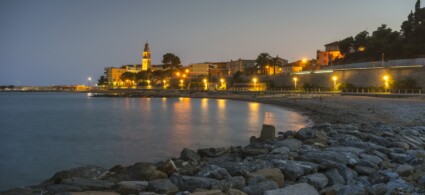
Taggia’s town beaches are located in the maritime hamlet of Arma and line a single sandy shore along a flat stretch of coast. Walking from west to east, you’ll encounter the Spiaggia della Fortezza, the Spiaggia dei Bagni Comunali and the Spiaggia Ex Colonia Ruffini; some areas are free, others equipped with facilities.
The abundance of amenities, easy access, shallow seabed and calm waters make these beaches suitable for everyone, from families with young children to young people in search of fun. The sea is a brilliant blue and clean—indeed, one of these beaches (Fortezza) has been awarded the Legambiente eco-label multiple times.
From Taggia you can quickly reach other seaside resorts along the Riviera di Ponente, including Santo Stefano al Mare, San Lorenzo al Mare and Riva Ligure.
Most of Taggia’s hotels are concentrated along the coast in the Arma area: you’ll find a wide choice of accommodation ranging from one to three-star hotels, flats and studios. In the historic centre, selection is more limited, though you’ll have better luck finding a bed and breakfast.
If you’re after a seaside holiday, beachfront hotels are certainly your best bet; however, the centre is not far away, so don’t rule it out automatically, especially if you’re after something more budget-friendly.
For luxury hotels (four and five-star), you’d do better to look further afield; if you’re after mid to high-end houses and villas, however, you can search locally.


Driving to Taggia is straightforward: simply take the A10 Genoa-Ventimiglia motorway and exit at Arma di Taggia; you can also reach it via the SS1 Aurelia road. Free and paid parking is available in town.
The nearest Italian airport is Genoa, but Nizza in France is actually closer, around 70 km away.
You can reach Taggia by public transport: the Arma hamlet has a railway station served by regional and Intercity trains to all major Ligurian towns, including Genoa, Ventimiglia and Sanremo. Getting to Cinque Terre from Taggia is more complicated, requiring one or two changes and involving a lengthy journey.

 Hotel
Hotel  Budget accommodations
  Apartments
  Family Hotel
  Luxury Hotel
  Resorts