Grand Hotel De Londres
Sanremo - Corso Matuzia 2
Book now
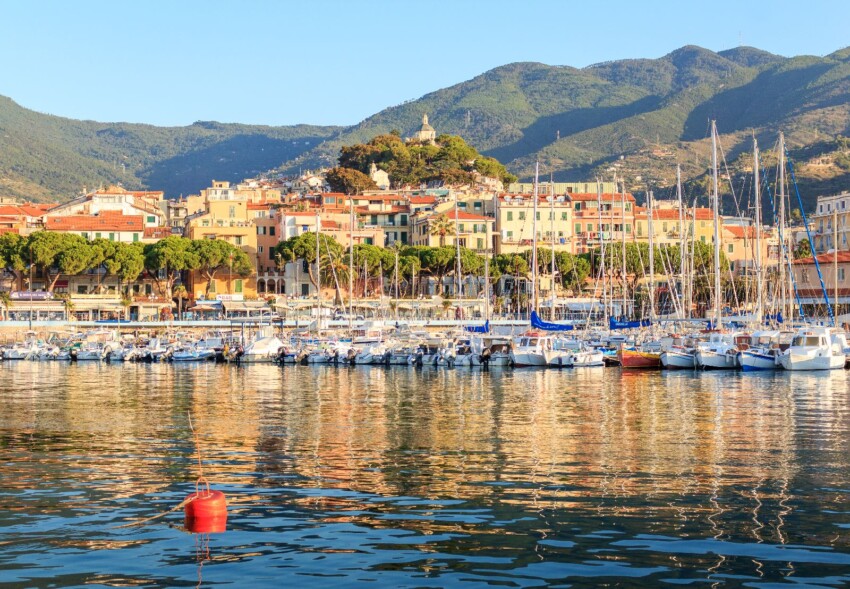
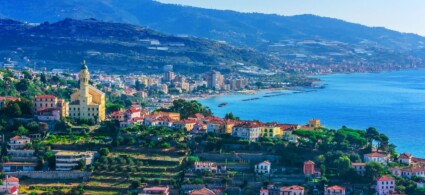
Capital of the Riviera dei Fiori and the most fashionable resort in western Liguria, the charming city of Sanremo is synonymous with mild climate, azure sea and plants and flowers that flourish all year round.
The gentleness of its climate and landscape once provided comfort to illustrious figures with health problems who came here to regain their energy and spirits. Nobles and intellectuals from across Europe made Sanremo their earthly paradise between the late 19th and early 20th centuries, leaving the city a legacy of their opulent villas, rows of palm trees and international fame.
For the past few decades Sanremo has attracted more interest in winter than summer: thanks to Italy’s most important television event, broadcast annually from within a historic city theatre. Beyond the beloved/controversial Festival della Canzone Italiana, Sanremo hosts other major events such as the Premio Tenco, the sailing race Giraglia, the finish of the Milano-Sanremo cycling race and a historic rally.
When celebrities and journalists depart, Sanremo’s hotels are repopulated by tourists, perhaps less wealthy than the illustrious guests of yesteryear but equally captivated by the charm of this most elegant resort.
There are countless attractions to discover and wonderful experiences to enjoy during a holiday in Sanremo, but perhaps you need a reason to choose this destination over the many splendid resorts in Liguria? Sanremo is Sanremo, and nothing more needs to be said.
Between Festival venues, narrow alleyways of the historic quarter, lush gardens, stately villas and other iconic buildings, a day in Sanremo passes quickly: there are so many things to see that you’d be better off staying for a night or more.
The historic quarters develop inland, on the hillsides, while the more modern area with grand Liberty-style palaces and attractions stretches along the coast. Here you’ll also find the tourist marina, a highly sought-after mooring, with over 800 berths capable of accommodating vessels up to 90 metres in length.
The main street of modern Sanremo is Corso Matteotti, also known as “La Vasca”. It’s an elegant pedestrian street lined with a long row of shops, perfect for shopping and enjoying the dolce vita.
It could be any high street like so many others you’d find in Italy, but being Sanremo, it’s been made unique by plaques bearing the names of Sanremo Festival winners: how many can you remember? Challenge your travel companions to see who can recall them all!
From Corso Matteotti you reach Piazza Colombo, Sanremo’s central square overlooking the famous Teatro Ariston, and continuing beyond you’ll arrive at the Casino.
In the stretch between the square and the Casino stands a statue dedicated to Mike Bongiorno, a figure who shaped Italian television history, hosting some of the most successful television programmes of the 1980s and 1990s, including several memorable editions of the Sanremo Festival.
Sanremo’s iconic building is its famous Casino, a magnificent Art Deco Liberty-style palace designed by French architect Eugène Ferret. Opened in 1905, it’s Italy’s oldest casino and still one of the four most important, as well as the historic home of the Festival della Canzone Italiana from its first edition in 1951 until 1976.
It’s a place where the luxury and carefree spirit of the early 20th century seem never to have faded. From the sumptuous white façade creating a magnificent contrast with the clear azure sky of the Riviera to the spacious rooms decorated with magnificent chandeliers, elegant colonnades, period furniture and enormous windows letting in abundant natural light, everything here seems to keep alive the dream of happy times and wealth.
Although it’s a place where gambling is still synonymous with elegance, the Sanremo Casino is not an exclusive establishment. Admission is free and all adults can enter to take a look at this temple of refinement, without being obliged to gamble or purchase food and drink. You do need to follow some dress code rules, but don’t worry: you won’t need to buy expensive evening wear from famous designers!
It’s worth passing by the Casino twice, once during the day and once in the evening to see its magnificent façade enhanced by the sun’s rays and night-time lights. If you’re happy taking a photo from the outside, you can walk by in shorts and a t-shirt.
The temple of Italian light music is the historic Teatro Ariston in Sanremo, known to all Italians as the home of the Song Festival. Thanks to Italy’s most-watched television programme, this theatre has become a household name, even more famous than many larger and culturally more prestigious Italian theatres.
Opened in 1963, it’s a cinema-theatre capable of seating almost 2,000 spectators. When the Festival’s spotlights and other major events such as the Premio Tenco dim, the theatre is used for “regular” theatrical and film performances.
It’s not open to the public for guided tours, so the only way to admire the interior is to buy a ticket for a performance on the schedule. Alternatively, you can do as most tourists do: snap a selfie in front of its famous entrance.
Leave the elegant seafront areas to discover a Sanremo away from the spotlight and paparazzi’s cameras: La Pigna is the city’s characteristic ancient quarter, clinging to the slopes of the hills that amphitheatre-like surround the modern districts.
It’s a maze of narrow streets and alleyways that from above vaguely resemble a pine cone, hence the name; you won’t find the grand Liberty palaces of the coast here, but typical cottages crowded together.
Walking through La Pigna’s steep streets is a tiring but rewarding endeavour. The main entrance is Porta di Santo Stefano, a Gothic-style stone archway; the main street is Via Palma, leading to the 17th-century Chiesa di San Giuseppe.
Another wonderful walk to take in central Sanremo, far more relaxing than the winding streets of La Pigna, is the Passeggiata dell’Imperatrice. This is what the city seafront is called, in memory of Russian Empress Maria Alexandrovna who, enchanted by Sanremo, gifted the city with numerous palm trees.
Many of these still adorn the seafront today, the very promenade the Empress herself walked along during her daily strolls, providing pleasant relief from the summer heat.
During your walk you can admire a statue dedicated to Spring and a monument to Giuseppe Garibaldi.
As the name suggests, Villa Nobel is an elegant 19th-century building in Moorish style that belonged to Alfred Nobel, inventor of dynamite and the prestigious literary and scientific prize that bears his name.
It was his home and study from 1891 to 1896, the year of his death. It’s curious to think that this idyllic spot, nestled in the greenery of a lush park just steps from the sea, was the place where an explosive invention (literally!) was conceived.
Today Villa Nobel is both an architectural masterpiece and a repository of history and culture. It’s well worth a thorough visit, though it’s somewhat removed from central Sanremo.
Three floors of the villa are open to the public and house a museum dedicated to Alfred Nobel: you can see the study and bedroom of the famous scientist with some original furnishings, his working instruments, and a copy of his will which established the Nobel Prize.
One section of the museum is devoted to the most important scientific discoveries of the 19th century, and another to the lives of Italian Nobel Prize winners.
Sanremo’s oldest religious building is the Cathedral of San Siro: the original nucleus, in Romanesque style, dates back to the 12th century and was built on the remains of an earlier Early Christian church; it was later expanded in the Baroque period.
It overlooks the square of the same name and houses several important works of art inside.
Next to the Casino stands a distinctive building whose architecture differs markedly from any other building in Sanremo, whether the elegant Liberty palaces of the seafront, the cottages of La Pigna or the historic churches. The Church of Christ the Saviour, better known as the Russian Orthodox Church, looks like a corner of Moscow transplanted to Liguria.
It was built at the beginning of the 20th century following the ever-growing number of Russian nobles who chose Sanremo as their holiday destination and the resulting development of the city’s Russian Orthodox community.
It’s impossible to miss, but if you need a clue look for the five domes in bright colours with gilded details. The tallest rises to a height of 50 metres above ground.
Less ancient than San Siro and less distinctive than the Russian Orthodox Church is the Sanctuary of the Madonna della Costa (also called the Sanctuary of Our Lady of the Coast), yet it is precisely this the religious building most dear to the people of Sanremo.
It’s located in the historic quarter of La Pigna, at the top of the hill, and is reached via a pedestrian path lined with cypress and olive trees; those who don’t wish to make the effort can drive up from the hamlet of San Romolo.
The construction of this church was commissioned by a sailor who escaped a pirate raid and was financed by public contribution. It was completed in the first half of the 17th century.
The Sanremo Civic Museum is a local history museum housed within Palazzo Borea d’Olmo, another of the city’s many splendid historic palaces. Built in the 15th century, it was embellished with 18th-century portals topped by statues.
The museum displays archaeological finds from prehistoric, proto-historic and Roman periods discovered in Liguria, a collection of paintings by writer Renzo Laurano, a collection of maps of the city and a collection of Garibaldi memorabilia.
Among the finest parks in the city of flowers, the Queen Elena Gardens stand out, an oasis of greenery hidden among the winding streets of La Pigna, just below the Sanctuary of the Madonna della Costa. They are dedicated to Queen Elena of Montenegro, one of the many illustrious guests to Sanremo in the golden age of elite tourism.
Today you too can stroll like a nobleman of times past through elegant avenues shaded by palms and rare plants. The gardens’ viewpoint is also one of the city’s finest vantage points: from here you can enjoy a splendid view over the rooftops of the historic quarter, the sea and the hinterland as far as Monte Bignone.
The Fort Santa Tecla is a defensive structure built by the Republic of Genoa following the riots of 1753: for this reason the cannons point towards the city rather than the sea as is the case with other fortresses along the Ligurian coast.
It’s located in Sanremo’s Old Port, a stronghold of bygone days among fishing boats and waterfront restaurants.
For some active tourism you can travel the Western Liguria cycle path, an easy cycling route with sea views suitable for everyone, including families with children. At 24 km long, it starts at San Lorenzo and ends at Ospedaletti passing through Sanremo and crosses woods and beaches.
You can cycle the entire route or walk sections of it, or use roller skates and skateboards.
Sanremo is also a good base for exploring western Liguria and—why not?—making a trip to the Côte d’Azur.
The village of Bordighera, so beloved by French painter Claude Monet, is just 20 minutes’ drive away, Ventimiglia is 25 minutes away, the medieval villages of Dolceacqua and Apricale are 45 minutes away. It takes about an hour to reach Nice and during the journey you can also stop at Monte Carlo.
Genoa with its magnificent Aquarium is reached in two hours. Cinque Terre is even further away, at approximately 240 km: allow at least three hours to get there.
Sanremo is far more than just songs, flowers and beautiful buildings: this charming town also boasts beaches washed by crystal-clear azure waters, rivalling other celebrated seaside resorts along the Ligurian coast.
Sanremo’s main city beaches are essentially two: Spiaggia dei Porti and Spiaggia Tre Ponti.
The Ports Beach takes its name from its location between the Old Port and Portosole, close to Sanremo’s centre. You can reach it on foot in around ten minutes via a pleasant seafront promenade, and from here you can easily access the magnificent Ormond municipal gardens when the heat becomes unbearable.
It’s a well-equipped beach lined with numerous beach clubs offering all manner of services and entertainment.
The Three Bridges Beach is the area’s most expansive free beach, equipped with only essential facilities such as toilets, showers and refreshment stands; it features a mix of sandy and shingle areas.
Popular with people of all ages, it’s the preferred beach for young people and particularly surf enthusiasts. Very busy, it’s not ideal if you’re seeking a peaceful sunbathing experience. We’d advise against driving here, as finding a parking space can be nightmarish: hiring a bike is far preferable.
Heading east from Sanremo’s centre, you’ll find beautiful beaches (both free and equipped) in the hamlet of Bussana, overlooking the charming Cala degli Orsi.
To the east of Bussana lies Arma di Taggia, a hamlet in the Taggia municipality just 15 minutes’ drive from Sanremo and hugely popular with families thanks to its sandy shoreline and shallow waters. Here too you’ll find both free and equipped beaches; the finest is Spiaggia della Fortezza, bordering the hamlet of Bussana.
If instead you head west from Sanremo, stop to sunbathe on the Ospitaletti beaches, a town facing an inlet bounded by Cape Nero and Cape Sant’Ampelio.
Along this stretch of coastline, beaches are rocky with mostly small coves, some free and others equipped. The recommended beach in this area is La Playa.
In the following map you can see the location of the main places of interest mentioned in this article.
Sanremo is a popular destination year-round, whether for its natural beauty or its major events. Over time, this has led to the opening of numerous hotels catering to different types of traveller.
VIPs and tourists wanting to indulge themselves stay in the grand hotels in the centre with spacious rooms boasting sea views, housed in elegant buildings that evoke the grandeur of Belle Époque tourism.
Three-star hotels and budget options are also concentrated in the modern part of town, near the beaches. In the mid-range category you’ll find everything from small family-run guesthouses with warm hospitality to international chain properties guaranteeing high standards. There’s also an excellent selection of holiday lets and apartments, though bed and breakfasts are less common here than in other Ligurian destinations.
The compact centre is easy to navigate on foot, and is well served by public transport to other parts of town, so wherever you choose to stay you’ll be able to get around easily. However, if you plan to go out in the evening, bear in mind that Sanremo’s nightlife largely happens outside the historic centre: the busiest venues cluster around the beach and include both upmarket establishments and more casual spots.
We strongly recommend booking well in advance in two situations: if you’re on a tight budget, as Sanremo’s accommodation is aimed primarily at the mid-to-upper market; if you’re travelling during major events, as hotels invariably reach full capacity.
If you want to visit Sanremo during festival week, plan your break several months ahead and prepare for premium prices.


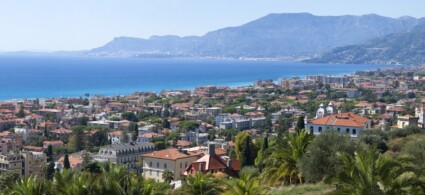
Sanremo stretches between coast and hinterland in an inlet bounded by Cape Nero and Cape Verde along the Flowers Riviera, a stretch of Ligurian coastline that forms part of the Ponente Riviera. Administratively, it falls within the Imperia province.
Reaching Sanremo by car is straightforward: simply take the A10 motorway (Autostrada dei Fiori) from Genoa and exit at Arma di Taggia-Sanremo East or Sanremo West-Coldirodi, or alternatively take the SP1 Aurelia and Aurelia bis roads.
Train is also a convenient option: Sanremo railway station sits on the Genoa-Ventimiglia line. Local and regional buses connect Sanremo to all the region’s main towns and the major resorts of the French Riviera.
The closest airport is Nice in France; within Italy, Genoa airport is nearest.
What's the weather at Sanremo? Below are the temperatures and the weather forecast at Sanremo for the next few days.
Sanremo lies just 20 km from the French border, closer to Nice (55 km) than to Genoa (150 km). The regional capital, Imperia, is 24 km away.
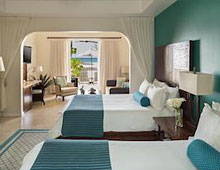 Hotel
Hotel 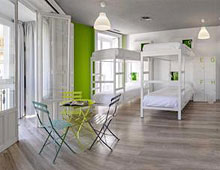 Budget accommodations
 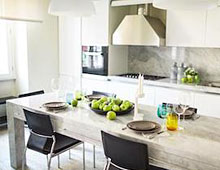 Apartments
  Family Hotel
 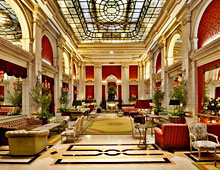 Luxury Hotel
  Resorts