Ristorante Hotel Mira
Sestri Levante - Viale Rimembranza 15
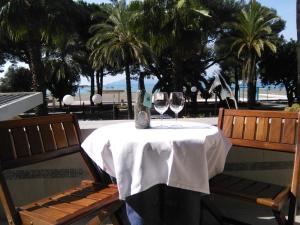
Located in front of the beach, Ristorante Hotel Mira offers classic accommodation in Sestri Levante.
Book now
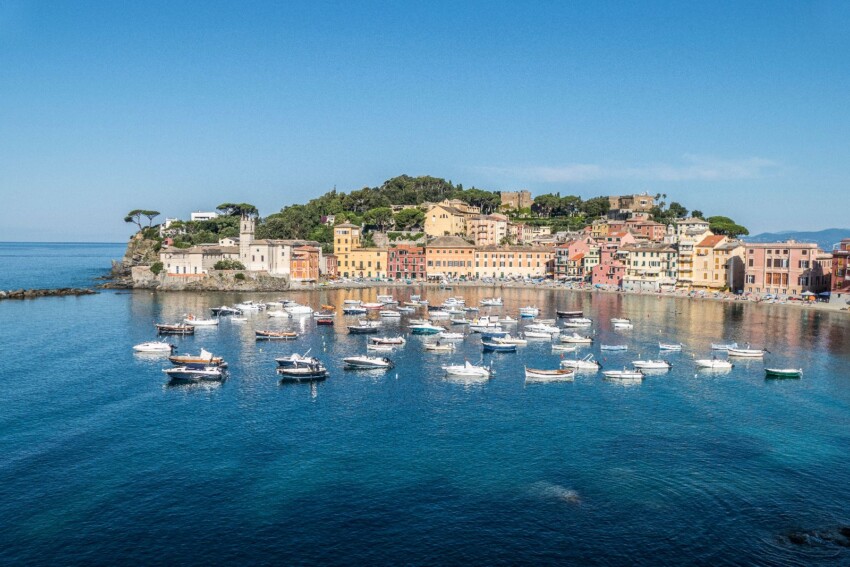
In Sestri Levante, which Danish writer Hans Christian Andersen renamed “the city of two seas,” he found inspiration for some of his most beautiful fairy tales.
Every year the town celebrates this famous visitor with an important Fairy Tale Festival, though the Bay of Fairy Tales – one of the two enchanting inlets that embrace the historic centre – was not named after him. It was the popular journalist and television presenter Enzo Tortora who gave it this poetic name: another celebrity who fell in love with this spectacular corner of Liguria. The list could go on for quite some time…
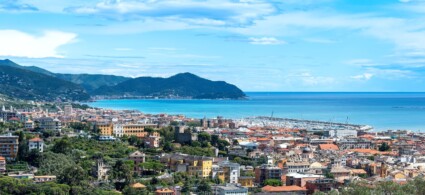
With ancient origins, Sestri Levante is a typical Ligurian town nestled between sea and mountains, characterised by low-rise buildings with pastel-coloured facades, elegant mansions, beaches lapped by azure waters and abundant greenery.
Overlooking the Gulf of Tigullio, it’s an ideal destination for those seeking a relaxing seaside holiday whilst also having time to explore the finest spots in Liguria. Easy to reach, well-equipped with all services and boasting a wide range of hotels and apartments, it will appeal to families, young people and couples seeking romance.
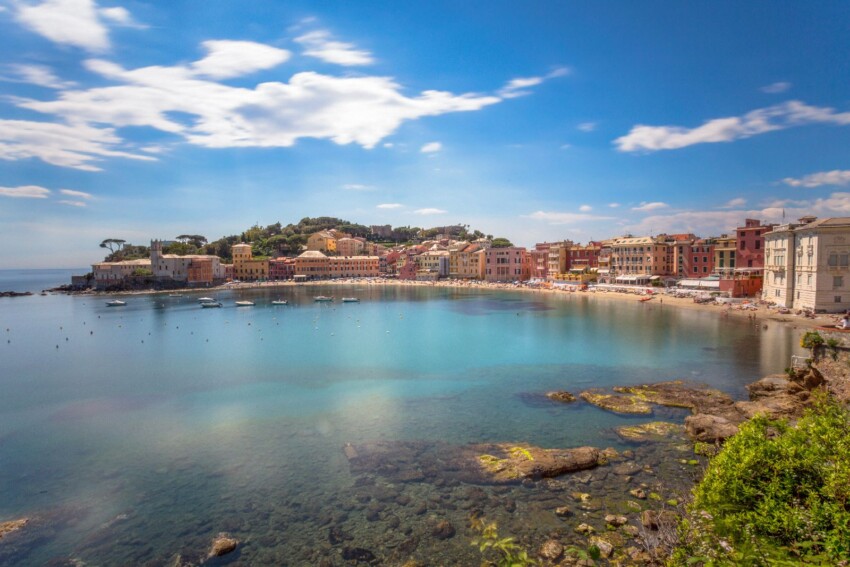
Among Liguria’s seaside resorts, Sestri Levante boasts the widest shorelines and the greatest number of free beaches. It’s therefore the perfect choice if you’re not keen on the typical Ligurian beaches – tiny in size and packed into every square centimetre – and prefer something more spacious. The sea, however, is characteristically Ligurian: azure and pristine.
Convenience and excellent facilities, the result of a tourism tradition dating back to the nineteenth century, are the hallmarks of Sestri Levante’s beaches. The finest stretch along the Bay of Silence and the Bay of Fairy Tales.
From Sestri Levante, you can reach all of Liguria’s most beautiful beaches on a day trip. Renowned resorts such as Camogli, Santa Margherita Ligure and Paraggi are only 30 km away, Rapallo 20 km, and Chiavari 10 km.
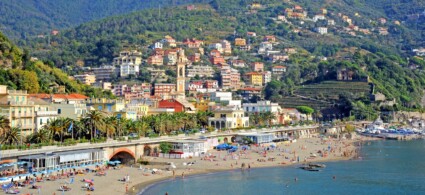
The Bay of Silence, which takes its name from poet Giovanni Descalzo, is the smaller of the two and lies east of the isthmus connecting Sestri Levante’s historic core to the modern part of town; the beach is a narrow strip of fine sand between azure waters and a frame of pastel-coloured buildings.
Ranked among Italy’s most beautiful beaches by TripAdvisor users, the enchanting Bay of Silence beach is worth visiting even if sunbathing for hours isn’t your style. Beautiful by day, at night it becomes positively magical as the lights from the surrounding houses reflect on the calm waters lapping the shore, creating mesmerising effects. It’s often used as a venue for open-air performances.
To the west of the isthmus lies the Bay of Fairy Tales, the larger of the two, lined with several beach clubs and free beach areas. As you venture further into the bay, you gradually move from sandy beaches – considerably wider than those of the Bay of Silence – to pebbly stretches and finally to rocky outcrops.
The entire stretch from the small harbour to the Sant’Anna tunnel is suitable for swimming. Among the beach clubs, some cater primarily to young people, offering water sports equipment rental and bars with plenty of socialising opportunities.
Moving east from the centre for just 3 km, you’ll find Riva Trigoso Beach, the name given to two sandy beaches separated by the mouth of the Petronio river. In summer the river often runs dry, making it easy to cross from Riva Ponente (also called Riva Vecchia) to Riva Levante (Riva Nuova). Here too, equipped zones alternate with free areas.
Continuing eastwards, you’ll reach Renà Beach, a shoreline of pebbles and coarse dark sand, bordered on one side by rocks and boulders. It’s largely free, though there is an area with parasol rental and other essential services.
The beach is famous for the Asseu, a jagged rock topped with a cross: it’s highly photogenic, especially when the sea is rough and waves crash dramatically against it! Off the coast, at a depth of approximately 11 metres, lies the underwater sculpture Nativity of Dolphins created by Pietro Luigi Ravecca.
Sestri Levante blends the charm of an ancient village with that of a seaside resort. You can therefore alternate leisurely beach time with pleasant urban walks and interesting cultural attractions.
The historic centre sits on a small promontory squeezed between two bays, the Bay of Silence and the Bay of Fairy Tales; the two bays are separated by an isthmus connecting the town’s old quarter to the mainland.
The beating heart of city life is the magnificent Palazzo Fascie: it stands out among other buildings on Corso Colombo, a seafront street in the centre, for its distinctive rust-coloured facade and elaborate crenellated tower which has become a civic symbol.
Inspired by Coppedé architecture and Genoa’s McKenzie Castle, the palazzo is today a multi-purpose building housing important cultural and tourism promotion organisations: the library, the tourist information office, the historical archive and the MuSel museum; it’s also used as a venue for events.
Housed on the third and fourth floors of Palazzo Fascie, MuSel – Archaeological Museum of the City guides you through Sestri Levante’s remarkably long history from the Palaeolithic age to the last century. On display you’ll find a collection of artefacts from excavations and underwater recoveries, documents and photographs; the route is organised chronologically.
The crown jewel of the collection is the Boundary Stone of Monte Ramaceto, a Roman boundary marker that allowed researchers to trace the imperial estate’s influence on the rural landscape in the Gulf of Tigullio. It’s an exceptionally rare and valuable artefact, unique of its kind, which has generated considerable interest.
Sestri Levante’s historic centre is rich in churches and historic palaces.
The town’s oldest religious building is the Church of St Nicholas of the Island6, built in 1151 in Romanesque style and later modified with Baroque additions in the fifteenth century. Dating from the seventeenth century are the Basilica of Santa Maria di Nazareth, the Church of the Immaculate Conception (easily recognisable by its white and black striped facade) and the Church of St Peter in Chains.
Among civic buildings, besides the aforementioned Palazzo Fascie, mention should be made of the Palazzo Durazzo-Pallavicini7, now home to the Town Hall. The medieval arched bridge over the Gromolo stream and the slate portals from the fourteenth century evoke atmospheres of bygone times.
Overlooking the stunning Bay of Silence, civic pride and joy, the Galleria Rizzi represents one of the most important art museums in the area between La Spezia and Genoa.
The venue is an elegant palazzo that was once home to lawyer Marcello Rizzi’s family, and it is thanks to his vision that a private collection of paintings, sculptures, ceramics, furniture and furnishings from the fifteenth to the eighteenth centuries is now open to the public.
On the first floor, some original furnishings have been preserved, allowing you to admire a typical Ligurian middle-class home as it was at the turn of the nineteenth and twentieth centuries.
Not just museums, churches and palaces: a stroll through Sestri Levante’s centre is also an opportunity to shop in shops and artisan boutiques that have been open for over 50 years and still preserve original fixtures and signage: grocers, inns, pastry shops, fishmongers, clothing shops, appliance stores, haberdasheries and more.
These charming places where time seems to have stood still have been recognised as a heritage worth preserving to celebrate the town’s social and economic fabric. Do your bit with some shopping or get a haircut at the historic Baicin Barber Shop9.
After exploring Sestri Levante’s characterful historic centre, pay some attention to the hamlets along the coast and inland.
Particularly charming is the hamlet of Riva Trigoso10, south-east of the centre; the gulf it overlooks is bounded by the headlands of Punta Manara (to the west) and Punta Baffe (to the east).
It’s divided into Riva, the more modern part along the coast, and Trigoso, the original nucleus set on the hills behind the sea: both hamlets have maintained a traditional character, with rows of colourful little houses.
Among the inland villages, nestled in greenery and guardians of ancient farming traditions, worth mentioning are Santa Margherita di Fossa Lupara, San Giacomo di Loto, Montedomenico, San Bartolomeo, Villa Ginestra and Villa Azaro.
The surroundings of Sestri Levante are packed with nature trails at various levels designed for hiking and cycling enthusiasts.
You can choose between easy coastal walks or strolls through characterful villages and challenging trekking in the woods, cycle paths suitable for family outings or mountain biking trails for experienced riders. Spend an hour or a whole day exploring the unique blend of sea and mountains that makes Liguria special.
Among walks suitable for all abilities are the Sant’Anna rocks trail, the path from San Bartolomeo to Monte Castello and the one from Villagrande via Riva to Moneglia.
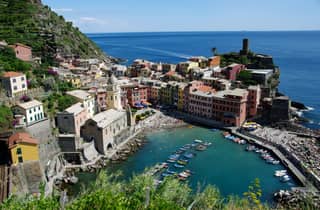
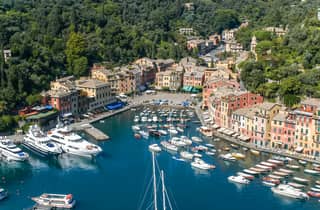
Sestri Levante is perfectly positioned to visit both Cinque Terre and Portofino and nearby towns, such as Camogli, San Fruttuoso and Rapallo. On the journey between Sestri Levante and Portofino, you can stop off at Chiavari.
In the following map you can see the location of the main places of interest mentioned in this article.
Rural cottages with pools, small apartments with bay views, elegant hotels housed in historic mansions, budget-friendly family-run guesthouses offering warm hospitality: Sestri Levante’s accommodation range is extensive and of excellent quality, so you’ll have no trouble finding a room or home to suit your taste.
Bungalows and mobile homes in campsites are a popular choice for families and outdoor holiday enthusiasts; if you love the freedom of camping but desire greater comfort or charm, you might opt for glamping.
Despite the wide availability of hotels, bed & breakfasts, holiday homes and campsites, it’s advisable to book well in advance as Sestri Levante is a very popular tourist destination and often fully booked.
We offer a selection of hotels at Sestri Levante to suit all categories of travellers. The most booked by tourists are the sea-facing hotels, often right on the beach. If you want to play it safe, choose one of the following: they are among the most booked hotels in Sestri Levante, sorted by number of reviews.
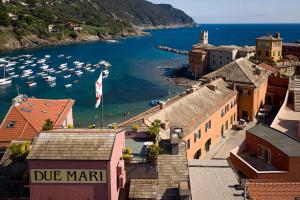

If you prefer space, privacy and the ability to prepare your own meals to a hotel holiday, book a holiday home at Sestri Levante. We recommend a few below, but in this case we advise you to book early because houses and apartments for rent at Sestri Levante are in high demand.


Driving to Sestri Levante couldn’t be simpler: just take the A12 motorway and exit at Sestri Levante; the motorway toll booth is just one kilometre from the town centre entrance.
Train is also a convenient option as the town is on the Pisa-La Spezia-Genoa line, served by numerous trains; connections to Milan are also good. Regional buses connect Sestri Levante with the main towns in Liguria.
The nearest airport is Genoa, about sixty kilometres away.
Ferries depart from Sestri Levante to all the main tourist attractions along the Eastern Riviera, including Cinque Terre, Portovenere, Portofino, San Fruttuoso, Rapallo and Santa Margherita Ligure. You can visit Sestri Levante for a day by arriving by sea or alternatively base yourself in Sestri Levante and travel by ferry to explore other destinations.
What's the weather at Sestri Levante? Below are the temperatures and the weather forecast at Sestri Levante for the next few days.
Sestri Levante sits on the Riviera di Levante, roughly halfway between Portofino and Cinque Terre. Genoa is about 50 km away, La Spezia a little further; Milan is 190 km away.
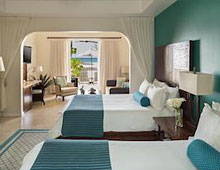 Hotel
Hotel 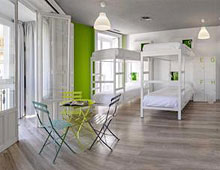 Budget accommodations
 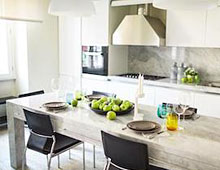 Apartments
  Family Hotel
 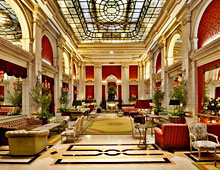 Luxury Hotel
  Resorts