Excelsior Palace Portofino Coast
Rapallo - Via San Michele Di Pagana 8
Featuring panoramic views of Portofino Bay, Excelsior Palace is a luxury 5-star hotel offering 2 restaurants, sun terraces and spacious rooms, many with sea views.
Book now
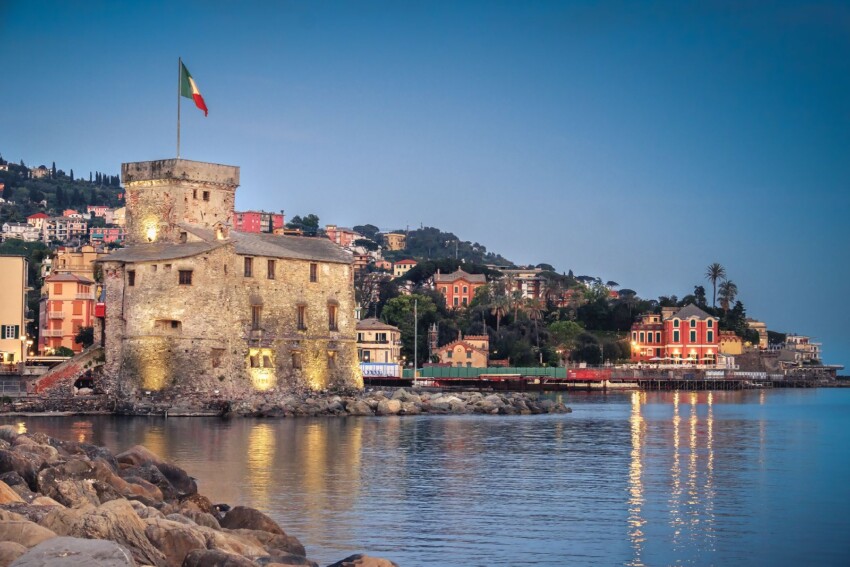
Rapallo is refined, nostalgic and lively: just 8 km from Portofino, it differs completely in atmosphere and clientele from its celebrated neighbour, which is rather exclusive and snobbish.
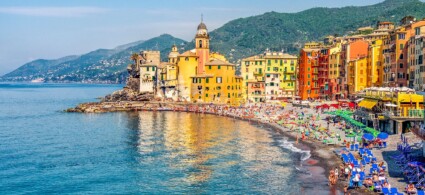
A tourist destination since the nineteenth century, this charming town situated in the heart of the Gulf of Tigullio has welcomed illustrious visitors such as Yeats, Nietzsche and Hemingway. Echoes of that opulent past are found in the beautiful Liberty-style palaces that flank the seafront promenade in the historic centre and in the iconic bright blue beach huts of its bathing establishments.
The beaches are tiny stretches of shingle and pebbles, with every possible space exploited to squeeze in another parasol. The pedestrian lanes of the centre, the caruggi, are narrow alleyways lined with tall houses. The windows are often fake, painted onto the walls of the houses: a legacy of a late eighteenth-century law that imposed a tax on the number of windows in a building.
Yet Rapallo has never given anyone a sense of claustrophobia. It could be the splendid walks along the coast or the trails through the greenery leading to a sanctuary with panoramic views, or the relaxation you feel watching Liguria’s romantic sunset from a hillside bed and breakfast, or the fine cuisine or the many things to do – after a holiday in Rapallo, you’ll feel rejuvenated in body and spirit.
A picturesque fortress by the sea, a seafront promenade serving as a fashionable meeting place, a monastery converted into a museum and auditorium, coastal trails or paths through verdant countryside, a church with a panoramic terrace, a museum with nostalgic charm… how many things to do in Rapallo!
The beating heart of social life in Rapallo is the Vittorio Veneto waterfront, the classic promenade for walks and meetings, flanked by palm trees and elegant Liberty-style palaces. Numerous bars and restaurants with outdoor seating line this street, perfect for a relaxing stop whilst sipping a coffee or enjoying a fish-based dinner.
In the centre of the waterfront stands the Music Kiosk, a memorial to Rapallo citizens who emigrated to Chile; it is used for concerts and performances.
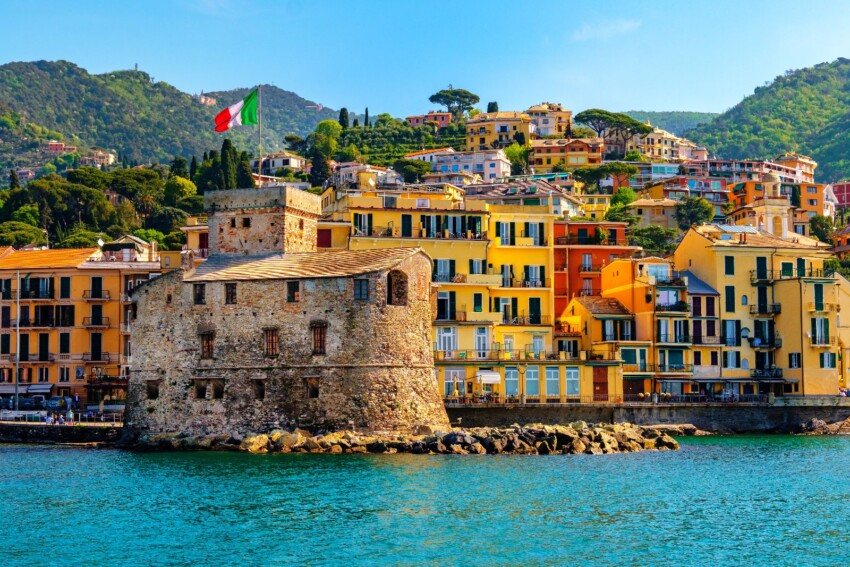
The emblematic building of Rapallo is the Sea Castle, a defensive structure built in the mid-sixteenth century on a promontory that marks the eastern end of the Vittorio Veneto waterfront and is connected to the mainland by a causeway.
Once a year, in early July, the castle is “set ablaze” during festivities for the patron saint. The castle burning (fake, of course!) is the climactic event of a series of pyrotechnic displays on the sea that are particularly striking and have become a draw for thousands of tourists each year; it begins at the end of the solemn procession that carries the silver ark of the Madonna through the city’s streets.
The patron saint celebrations begin on 1 July and continue until the 3rd: an outpouring of explosions, firecrackers, floating lights and luminous trails reflected on the waters of the sea.
The Sanctuary of Montallegro is a magnificent church in Renaissance-Baroque style built at 612 metres altitude, on the exact spot where on 2 July 1557 the Madonna appeared in a vision to a local citizen. The original core of the sanctuary was completed by 1559, it was enlarged in the seventeenth century and again between the late nineteenth and early twentieth centuries.
A stately staircase leads to the church square, from which you can enjoy a spectacular view of the sea. Inside the church is kept a Byzantine icon linked to a curious story. Claimed by citizens of Dubrovnik who maintained it belonged to their city, the icon was sent to Croatia but mysteriously disappeared during the crossing. It was found inside the sanctuary and has never been moved since.
There are two ways to reach the sanctuary, both quite fascinating. The most convenient (and least tiring!) is to take the cable car that departs near Rapallo railway station: during the short journey you can admire breathtaking views.
The other option is to reach the sanctuary on foot via a trekking trail that starts from the historic centre. Allow approximately an hour and a half to get there. The surroundings of the sanctuary are crossed by numerous other paths, so if you love walking you’ll be spoilt for choice.
Romanticism and elegance are the distinctive features of the unmissable Lace Museum of Rapallo. This delightful museum housed in the refined Villa Tigullio, an elegant residence surrounded by a garden with sea views, is dedicated to the tradition of bobbin lace (also called pillow lace), which has been passed down from generation to generation by Ligurian women since the sixteenth century.
On display you can admire dresses, bobbins, accessories and household linens: all embellished with elaborate lace decorations. You can also see preparatory drawings and learn more about this technique that calling it merely craftsmanship seems inadequate – it is a true art form.
The highlight of the collection is a panel depicting characters from the Commedia dell’Arte drawn by illustrator Lele Luzzatti and intended to decorate an American cruise ship.
Is the Vittorio Veneto waterfront not enough for you? If you love walking with the sea at your side, take the Pathway of Kisses, a pedestrian path that leads from Rapallo to Portofino.
8.5 km long and free of technical difficulties, it’s a splendid panoramic walk along one of Liguria’s most beautiful stretches of coast. The red carpet that covered it in the early years after its opening has been removed, but you’ll still feel like a celebrity on your journey to a town that symbolises sophistication and wealth.
The most celebrated religious building in the centre of Rapallo is the former Convent of the Poor Clares, a monastic complex overlooking the sea a short distance from the castle. Built in the seventeenth century, over the centuries it was used as a cloister convent, barracks, boat warehouse and school.
Today it hosts a theatre-auditorium with 265 seats and the Gaffoglio Museum, an eclectic art collection featuring works from the fourteenth to twentieth centuries donated to the town by the married couple Attilio and Cleofe Gaffoglio.
The collection also includes curious objects such as carved animal bones, artistically decorated beer tankards and Russian and Oriental artefacts.
The centre of Rapallo extends along the seafront, but the town’s territory is much larger and also includes some hamlets on the coast and inland.
Among the coastal villages, San Michele di Pagana7 is certainly worth mentioning: very popular in summer for its beautiful beaches, it deserves a visit even out of season. Worth seeing is the Church of San Michele: built in the twelfth century, it houses a painting by Van Dyck inside.
For slower pace and less hustle and bustle, head to the inland hamlets, oases of peace hidden among the greenery of the hills.
Nestled in wooded areas, the inland villages are scattered with traditional houses, small churches and votive chapels and are characterised by steep alleyways that wind up the mountainsides. Here you’ll get a glimpse of traditional Ligurian life and plenty of peace and quiet.
Among Rapallo’s inland hamlets, the most beautiful is probably San Massimo8, where you’ll find the ruins of the Monastery of Valle Christi, a medieval abbey now used as a venue for events.
From Rapallo you can easily reach all the main seaside resorts along the Ligurian coast east of Genoa.
During your holiday don’t miss the chance to mingle with celebrities strolling through Portofino, to lose yourself in romantic dreams in the enchanting Camogli or to visit a unique monastery like the Abbey of San Fruttuoso. And don’t miss an exciting boat trip: it’s the best way to admire the extraordinary beauty of this stretch of coast.
Rapallo is also perfect for those who love active holidays: there are numerous trekking and mountain biking trails in the area, diving sites and sports facilities.
In the following map you can see the location of the main places of interest mentioned in this article.
Along Rapallo’s shoreline there are a series of tiny beaches of shingle and pebbles washed by the typical azure waters of Liguria. Many of these are equipped, with parasols and sun loungers positioned in the most unlikely spots to make use of the limited space available.
Among Rapallo’s city beaches is also one of the few sandy beaches on the Riviera di Levante: the Lido Beach, an arc of golden sand bordered at the back by a row of white and blue beach huts.
Perfect for those who prefer a comfortable holiday, with bars and facilities within reach, it’s a beach suitable also for those travelling with small children. Thanks to three sea walkways, it was possible to increase the number of available parasols; in addition to essential services there’s also a swimming pool, hot tub, fitness area and children’s play park.
For a change of scenery you can take the ferry boat and swim in the San Fruttuoso bay, dominated by a wonderful medieval abbey.
Other beautiful beaches near Rapallo are the Pozzetto Beach in Zoagli, the beaches of Pomaro, Trelo and Prelo in San Michele di Pagana and Paraggi beach, called by many “Portofino’s beach”.
The choice of accommodation in Rapallo is much wider than in other nearby villages, such as Camogli or the ultra-chic Portofino.
Here you can find everything, from budget 2-3 star guesthouses to 4-5 star hotels, with a prevalence of mid-range facilities. There are also many bed and breakfasts and apartments, scattered between the centre and the inland hamlets.
The most luxurious hotels are housed in elegant residences built between the late nineteenth and early twentieth centuries; some are located in the historic centre, while others are slightly set back: the advantage in this case is larger gardens (almost always with a swimming pool too) and more tranquillity.
If you don’t want to use a car during your stay, pay attention to the location of your accommodation when booking: not all of Rapallo’s accommodation is close to the sea.
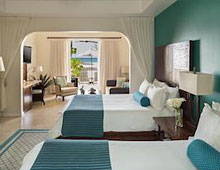
We offer a selection of hotels at Rapallo to suit all categories of travellers. The most booked by tourists are the sea-facing hotels, often right on the beach. If you want to play it safe, choose one of the following: they are among the most booked hotels in Rapallo, sorted by number of reviews.


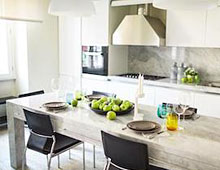
If you prefer space, privacy and the ability to prepare your own meals to a hotel holiday, book a holiday home at Rapallo. We recommend a few below, but in this case we advise you to book early because houses and apartments for rent at Rapallo are in high demand.


Arriving by car is really straightforward – just take motorway A12 (E80) and exit at Rapallo; you can also arrive via the Aurelia road (state road 1).
It’s also an easily accessible destination for those travelling by public transport. The railway connections along the Ligurian coast work well, and Rapallo is no exception: situated on the Pisa-La Spezia-Genoa railway line, it’s served by numerous regional and Intercity trains.
It’s possible to reach Rapallo by ferry boat from the main resorts on the Riviera di Levante, including Camogli, Portofino and Santa Margherita Ligure. Be aware though: some lines operate year-round while others are seasonal.
The nearest airport is Genoa.
What's the weather at Rapallo? Below are the temperatures and the weather forecast at Rapallo for the next few days.
Rapallo sits at the heart of the Gulf of Tigullio, on the Riviera di Levante, just 30 km from Genoa.
 Hotel
Hotel 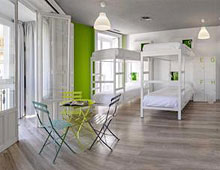 Budget accommodations
  Apartments
  Family Hotel
  Luxury Hotel
  Resorts