Hotel Cenobio Dei Dogi
Camogli - Via Cuneo 34
Featuring a free private beach, pool and sea-view restaurant, Hotel Cenobio Dei Dogi is set in Camogli.
Book now
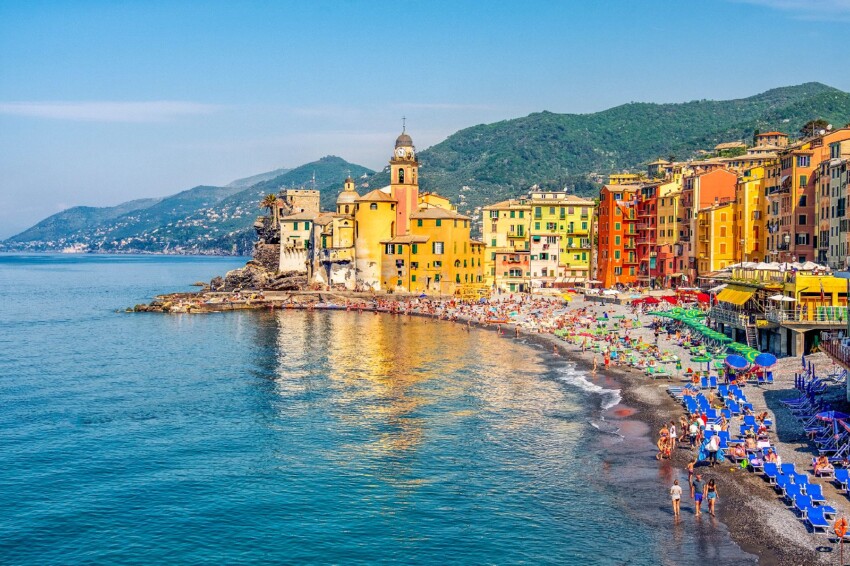
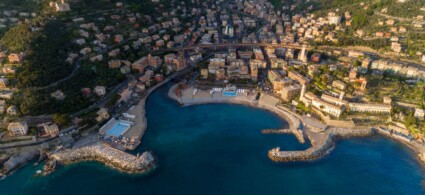
Nestled along the Golfo Paradiso, you’ll find one of the Riviera di Levante’s most romantic villages: the enchanting Camogli, a row of brightly coloured houses hugging the brilliant blue Ligurian sea, bordered to the west by the ruins of a medieval castle.
The sea is intrinsically linked to the history and identity of this charming town, proudly rooted in its maritime traditions. And the sea is also the omnipresent element of every visit to Camogli: it will be the backdrop to your lazy beach afternoons, the stunning view you’ll enjoy from your B&B terrace, the setting for unforgettable boat trips; you’ll find it in the local history museum, in the delicious dishes served in traditional little restaurants, at the popular festivals you might find yourself attending.
Just a stone’s throw from Portofino, Liguria’s quintessentially chic destination sitting on the other side of the mountain that borders the Golfo Paradiso, Camogli is polished yet refreshingly unpretentious.
Perfect both as a day trip destination from Genoa, Rapallo, Portofino or other Ligurian resorts, and as a base for a relaxing holiday in the Riviera di Levante, Camogli is an ideal place to embrace simple pleasures – a sunset, a seaside stroll, dinner by the water.
It’s also a perfect destination once summer has ended and the beach clubs have packed away their umbrellas for the season. This is thanks to Liguria’s typical coastal climate, with mild temperatures even in winter, and plenty of opportunities for walks and trekking on the Portofino mountain and in the surrounding areas.
Camogli’s historic centre is very small and easily explored on foot; from there you can easily reach other neighbourhoods and points of interest on foot, by bus or car, or by boat.
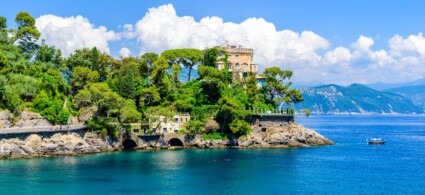
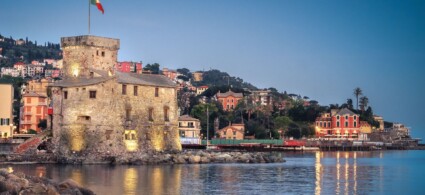
Castel Dragone, or Dragonara, is a fortress built in the 12th century to protect the village of Camogli; little remains today, just a square tower with four watchtowers, but it’s a highly evocative sight. The tower, perfectly preserved, sits perched on a rocky promontory that defines Camogli’s town beach and makes for wonderful romantic photographs.
Don’t confuse the Dragonara with the Dragun: the former refers to the medieval castle, the latter to a magnificent sailing boat built in 1968. Inspired by pirate vessels, the Dragun has taken part in numerous international sailing events and has become a source of pride for the town.
Ruta is a characteristic hamlet of Camogli situated on the western slope of the Portofino promontory. Historically significant, over the centuries it saw the passage of key figures in Italian national affairs, including Dante Alighieri, King Vittorio Emanuele I and Mussolini.
Another picturesque hamlet of Camogli is San Rocco, accessible by car or bus along a scenic road connecting it to Ruta, or via one of the many paths starting from the centre. Once there, you’ll find other trails leading into the Portofino mountain.
Punta Chiappa is one of Camogli’s iconic images: a rocky spur jutting out to sea at the foot of the Portofino mountain. The attraction here is an altar with a mosaic dedicated to the Madonna Stella Maris, the endpoint of the solemn procession of boats held on the first Sunday in August.
Punta Chiappa is reachable on foot from San Rocco via a steep path with nearly a thousand steps. Along the way you pass through San Nicolò di Capodimonte, another characteristic Camogli hamlet famous for its church of the same name.
If you prefer an easier route, you can take a ferry from Camogli to Porto Pidocchio and continue on foot from there.
A visit to the small Museo Marinaro Gio Bono Ferrari di Camogli is highly recommended: it’s not a museum famous worldwide, but it’s the best introduction to the maritime traditions that have shaped this village’s identity.
Every scale model, ship in a bottle, historical photograph, document, painting, nautical instrument, ship’s register or maritime-themed book you see in this museum has been donated by seafarers born and raised in Camogli.
This collection, dearly loved by residents, is an invaluable local heritage spanning tales of hardship and struggle but also wealth and prosperity.
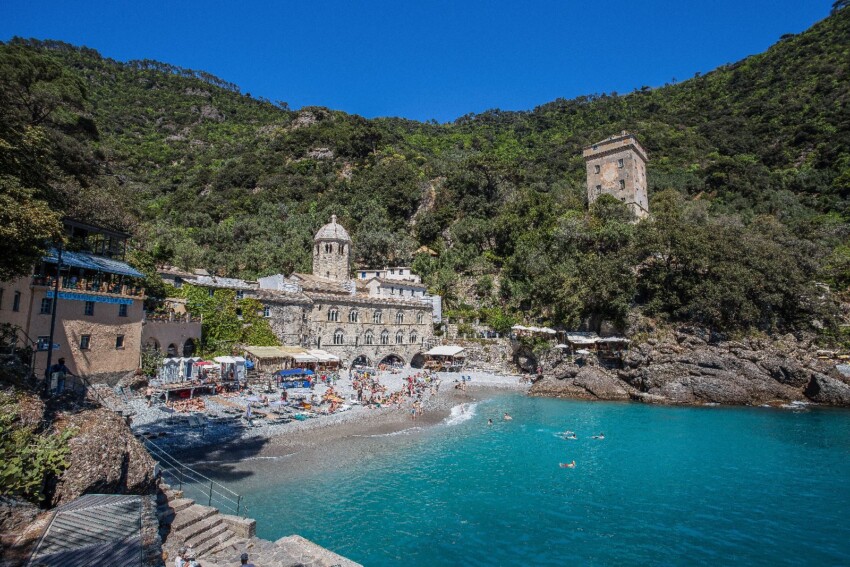
The Abbazia di San Fruttuoso is one of the most famous attractions around Camogli: a unique medieval monastery overlooking the sea in a secluded bay nestled in the green slopes of Portofino mountain.
The San Fruttuoso hamlet can be reached from Camogli on foot along a splendid path through greenery with glimpses of the sea; however, it’s a demanding walk on a steep trail, recommended for experienced hikers.
A more convenient, safer and arguably more fascinating alternative is to reach the hamlet by sea, taking a boat from Camogli’s port.
The Abbazia di San Fruttuoso is the most famous and most characteristic church around Camogli, but there’s no need to leave the village to find buildings of historical or architectural interest.
Notable examples include: the Chiesa di Nostra Signora del Boschetto7, a simple sanctuary nestled in greenery, built at the site of a Marian apparition in 1518; the Chiesa Millenaria di Ruta8, a Romanesque church built perched over the sea at a crossing point of ancient routes, perfect for enjoying stunning views; the Chiesa di San Nicolò di Capodimonte9, allegedly built in 345 AD (though historical records date its construction to the 12th century).
In the waters off San Fruttuoso beach stands the Cristo degli Abissi, a bronze statue by artist Guido Galletti placed on the seabed in 1954 to commemorate those lost at sea.
It’s an extremely popular diving site, but you can admire the statue even if you’re not a diver: the exceptionally clear waters offer excellent visibility, so you simply need to join a boat trip and pop your head underwater wearing a mask to make out the impressive figure of Christ with arms outstretched towards the sky.
Another popular diving site is the Grotta dei Gamberi at Punta Chiappa, named for the incredible number of langoustines covering its walls. This wonder is reserved exclusively for those willing to venture underwater.
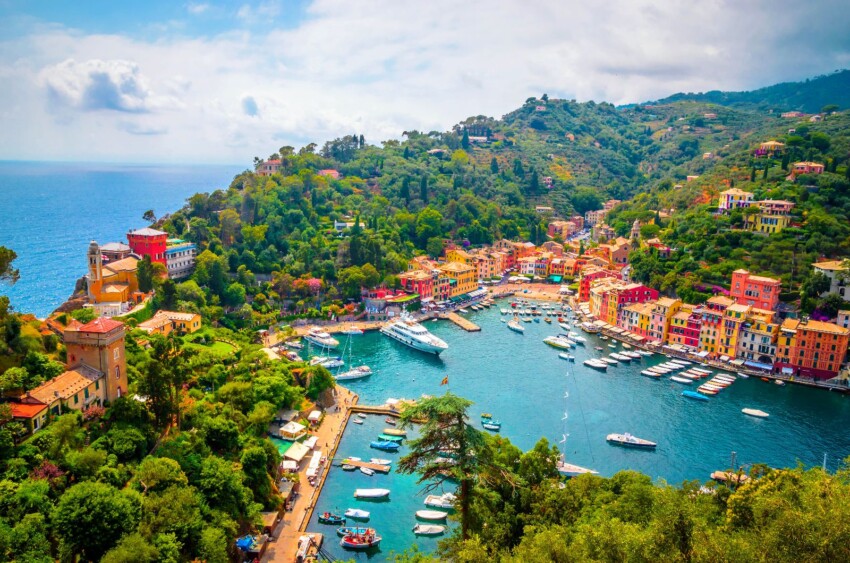
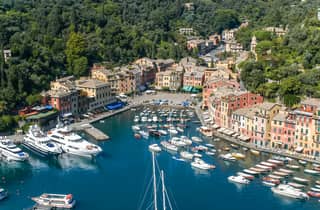
Liguria’s quintessentially chic destination is just a 30-minute drive from Camogli and can be reached even more conveniently by boat. Don’t miss the chance to visit Portofino, the region’s drawing room: a former fishing village nestled in an enchanting bay that has become a magnet for the international jet-set.
You can linger in the famous little square to watch the boats or sip a drink, or climb up to the castle and enjoy spectacular panoramic views.
In the following map you can see the location of the main places of interest mentioned in this article.
Camogli’s characteristic beach is a narrow strip of pebbles and shingle squeezed between clear turquoise waters and a row of tall houses with colourful facades. It’s a typical town beach divided into a free section and an equipped zone with all amenities, easily accessible and suitable for those travelling with young children.
A beach not to be missed in the Camogli area is found in the San Fruttuoso bay, dominated by the famous abbey. The beach is very small, but the breathtaking landscape and architectural setting make it well worth spending half a day or more here.
From Camogli you can easily reach Santa Margherita Ligure and other famous Ligurian seaside resorts.
The small town of Camogli is famous for popular events celebrating its inseparable bond with the sea; cherished by locals, they’ve become an attraction drawing thousands of visitors each year.
The first is the hugely popular Sagra del Pesce held on the first Sunday in May. Established in 1952, it’s a true celebration of taste centring on the enormous pan used to fry fish, displayed prominently in the historic centre. The original pan used in the 1950s weighed 11 quintals; the one currently in use weighs 28.
On the evening before the Sagra del Pesce begins, the Festa di San Fortunato is celebrated, perhaps the most beautiful of all Camogli’s popular festivals. Dedicated to the patron saint of fishermen, it blends the sacred and the secular: the festival programme includes solemn processions, communal banquets, fireworks and artistic bonfires on the beach.
Another festival not to miss takes place on the first Sunday in August and is dedicated to Stella Maris, the Madonna venerated by fishermen. The festival’s highlight is the procession of boats departing from Camogli’s port and reaching Punta Chiappa, where a mass is celebrated. To close the festival, lit candles are released into the sea that from a distance appear like stars floating in the dark universe of the ocean: a deeply moving sight.
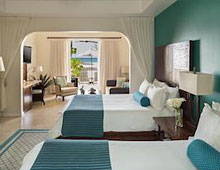
Camogli’s accommodation lives up to the village’s reputation as a romantic destination. Scattered between the historic centre and the surrounding hills you’ll find charming B&Bs, hotels and flats housed in buildings with typical pastel-coloured facades or elegant historic residences. The most sought-after feature sea views or a garden; the most luxurious boast swimming pools.
While not as exclusive as Portofino, Camogli isn’t an inexpensive destination. There’s no shortage of bed and breakfasts, inns and holiday rentals with affordable prices, but these are the first to sell out, so if your budget is tight try to book as early as possible to have more choice.
We offer a selection of hotels at Camogli to suit all categories of travellers. The most booked by tourists are the sea-facing hotels, often right on the beach. If you want to play it safe, choose one of the following: they are among the most booked hotels in Camogli, sorted by number of reviews.


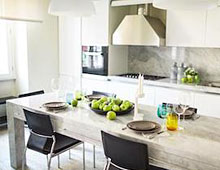
If you prefer space, privacy and the ability to prepare your own meals to a hotel holiday, book a holiday home at Camogli. We recommend a few below, but in this case we advise you to book early because houses and apartments for rent at Camogli are in high demand.


For those travelling by train, the main station is Camogli-San Fruttuoso, located on the Genoa-La Spezia railway line: it’s quite an important route so trains run frequently. Local buses connect Camogli to the region’s main resorts, and the town is also reachable by boat from Genoa’s Porto Antico, from Rapallo and from Santa Margherita Ligure.
Car remains the best option for those wanting freedom and speed in getting around. Camogli can be reached by car via the A12 Genoa-Livorno motorway (exit: Recco) or the SS1 Aurelia state road.
Genoa’s airport is the closest to Camogli, about 30 km away and easily accessible by train, bus and taxi.
What's the weather at Camogli? Below are the temperatures and the weather forecast at Camogli for the next few days.
Camogli sits along the Riviera di Levante, roughly 20 km from Genoa and 160 km from Milan, and is easily accessible by various means of transport.

 Hotel
Hotel 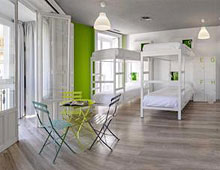 Budget accommodations
  Apartments
  Family Hotel
  Luxury Hotel
  Resorts