Sea Holidays and Beach Destinations in Liguria
A seaside holiday in Liguria: which is better, the Riviera di Ponente or Riviera di Levante? Here are the best stretches of coastline and resorts to choose as your holiday base.
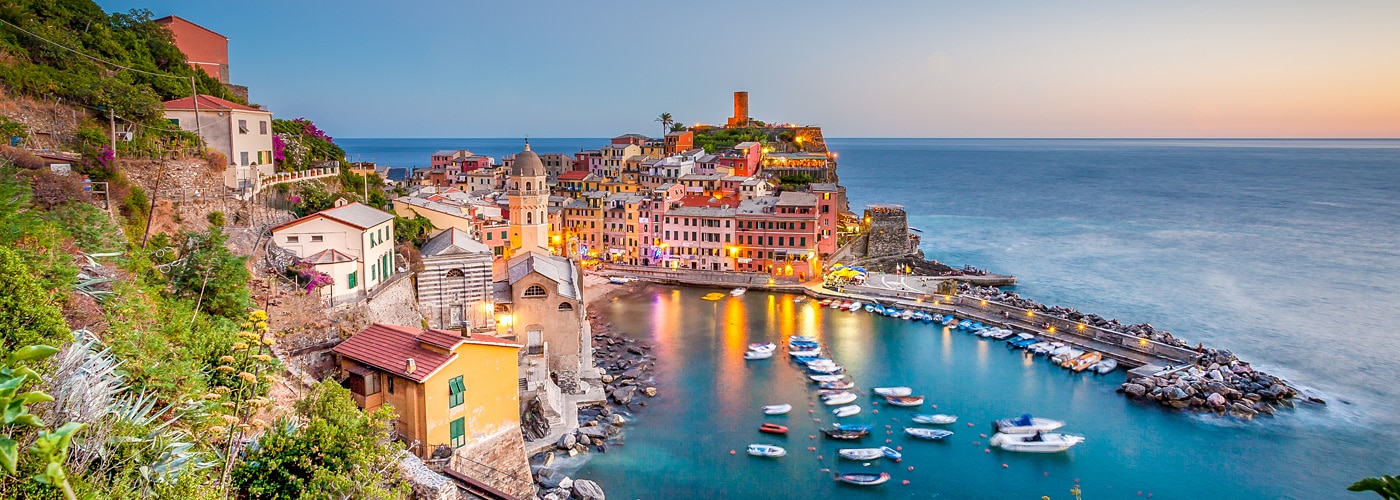
There’s a region in Italy where mountains are not the antithesis of the sea, but rather its evocative prelude: Liguria. It’s a land that’s difficult and inhospitable, yet over the centuries the Ligurians have managed to transform it whilst preserving its beauty intact. The cultivated terraces and tower-houses that rise vertically stand as symbols of the ingenuity and labour that made this miracle possible.
This centuries-long work has gifted us today a unique landscape capable of enchanting visitors from across the world. The Cinque Terre are one of Italy’s most iconic images for foreigners, a destination capable of competing for the top spots in the rankings of most-visited destinations, rivalling the likes of Rome, Venice, Florence and Naples. Yet they’re far from the only wonder you’ll discover during a holiday in Liguria.
Genoa is a unique regional capital – an entire city squeezed between sea and mountains, somewhat Superba as it’s known, but also vital and, in its own way, welcoming. Nineteenth-century romanticism and literary intrigue await you in the villages of the Golfo del Tigullio and the Golfo dei Poeti; if you prefer worldly life to silence and contemplation, Portofino and Sanremo will not disappoint.
Take advantage of Liguria’s fine climate – a northern region with the pleasant temperatures of the south, where flowers and Mediterranean vegetation thrive in abundance. Liguria wins you over 365 days a year: with our online guide, organising your own holiday is easy – why wait any longer? Your dream begins here.
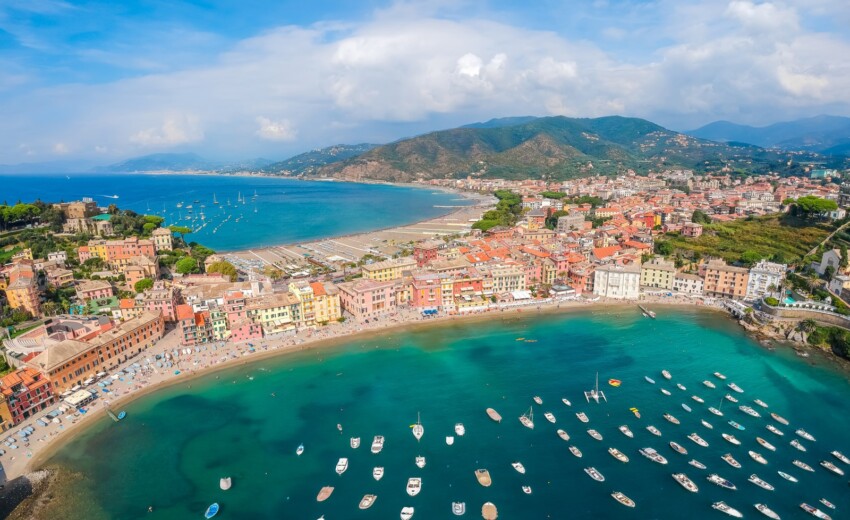
Liguria is famous for its mild climate, with pleasant temperatures and often the chance to swim well beyond summer’s end. The Ligurian winter resembles that of southern Italy far more than the foggy, cold winters of the nearby Po Valley.
You can therefore visit Liguria all year round. Summer remains the best period for seaside holidays, but if you’re travelling in July and August, it’s essential to book well in advance as the coastal resorts are always very crowded.
For trekking or cycling holidays, the best time is spring or early autumn, which are also when the beauty of the villages is most appreciated.
There are Ligurian destinations perfect for a romantic getaway, others for a high-adrenaline weekend, and still others for a slow-paced holiday or exciting food and wine tours.
Here’s a guide to Liguria’s most beautiful destinations to help you plan your itinerary.
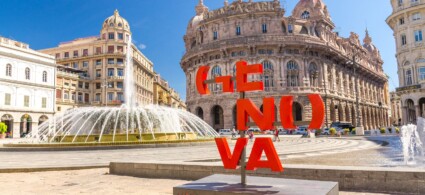
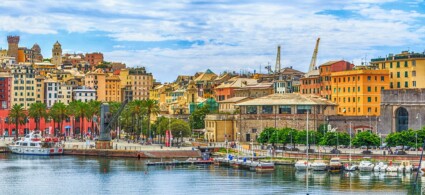
Among Italian cities not to miss, Genoa certainly deserves mention. It’s a unique destination that combines maritime traditions, street food among Italy’s finest, bustling caruggi (narrow alleyways) alongside elegant streets lined with splendid palaces, and a reborn Porto Antico with modern attractions that tell the story of Genoa’s inseparable bond with the sea.
A city full of surprises is Savona, often dismissed as merely “the cruisers’ city”. Yet it’s also home to the Sistine Chapel outside Rome, the world’s largest Apple museum, a distinctive sandwich you simply must try, and other interesting attractions.
Another city unfairly relegated to a mere arrival port is La Spezia, which can actually serve as an excellent base for exploring Cinque Terre and the enchanting towns of the Golfo dei Poeti.
Imperia, the westernmost city, is a two-soul destination: the characteristic Porto Maurizio district rises on a promontory, whilst Oneglia nestles along the mouth of a stream.
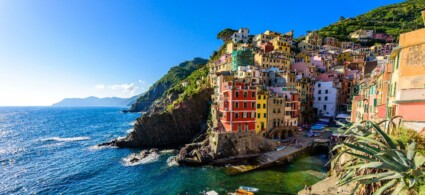
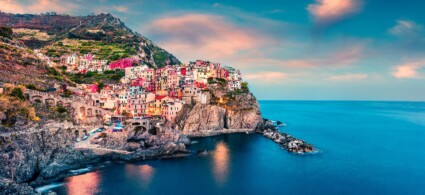
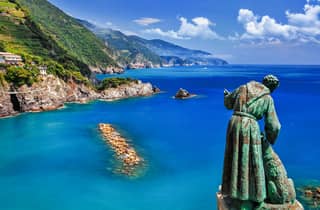
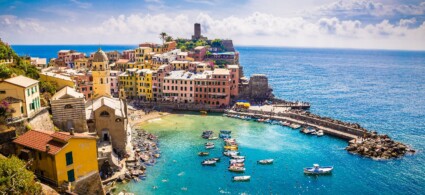
If you have limited time to visit Liguria, focus your weekend or holiday on the Cinque Terre and you can’t go wrong. These tiny villages carved from the sea represent one of the world’s finest examples of human intervention in harmony with nature.
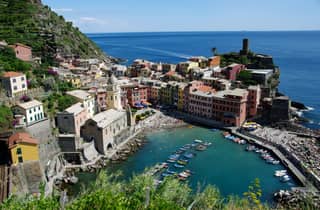
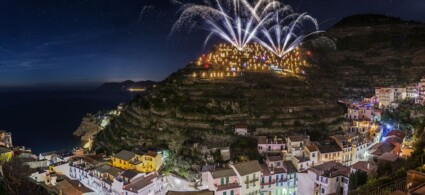
The whole world envies us for Vernazza, Riomaggiore, Manarola, Corniglia and Monterosso al Mare: would you really want to miss them? They share common features (romantic views, colourful tower-houses, sea vistas…), but each has its own distinctive charm. Try to see as many as possible… or all of them – that would be even better.
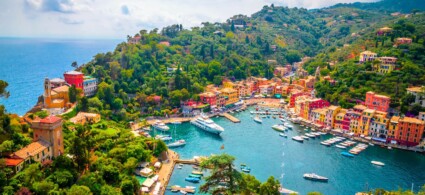
Cinque Terre aren’t the only Ligurian villages worth visiting. There are many others, some well-known, others waiting to be discovered. Need some ideas?
Portovenere, Lerici and Levanto are Riviera di Levante towns that enchanted English Romantic poets in the nineteenth century.
Romanticism also abounds at Camogli, from where you can take an thrilling boat trip to the Abbey of San Fruttuoso, and Finalborgo, considered one of Italy’s most beautiful villages. For a different kind of romanticism, with darker atmospheres, visit Triora, the Land of Witches.
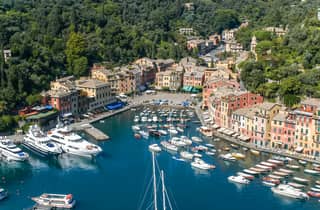
Portofino is Liguria’s chic capital, beloved by VIPs and celebrities. If you’re not keen on high society, you can retreat into the park’s trails, immersed in lush nature.
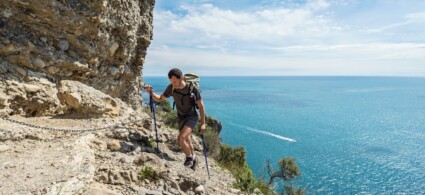
Thanks to its mild climate, landscape variety and range of specialist services, Liguria has emerged as a top destination for lovers of outdoor holidays.
For mountain biking enthusiasts, it’s a true paradise with trails suited to every discipline (cross country, downhill, enduro, e-MTB) and various skill levels; other popular outdoor activities in Liguria include hiking, rock climbing, diving and sailing. Albenga, Finale Ligure, Sestri Levante and Rapallo are excellent bases for those wanting an active outdoor holiday.
Those who prefer less strenuous pursuits can relax with walks in one of Liguria’s many natural areas and gardens. Don’t miss the Cinque Terre National Park, Portofino mountain park, and Villa Rocca Botanical Garden in Chiavari.
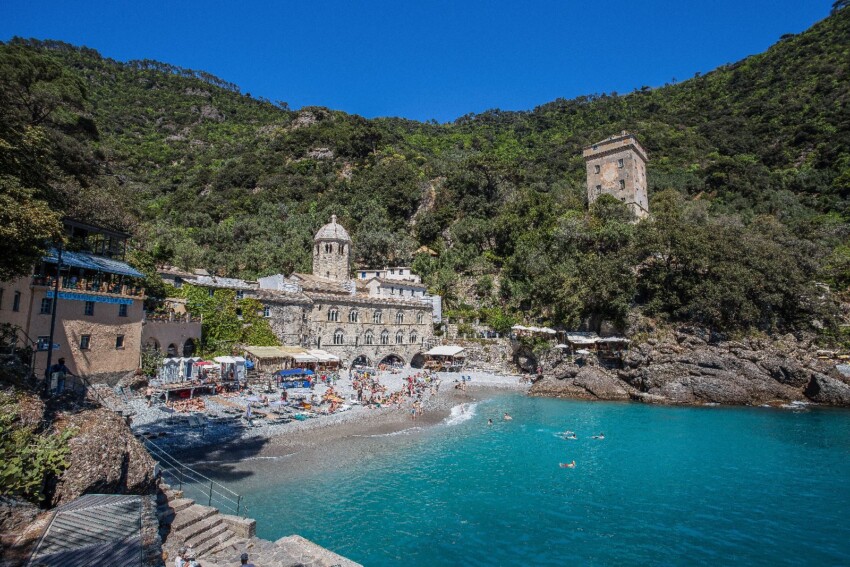
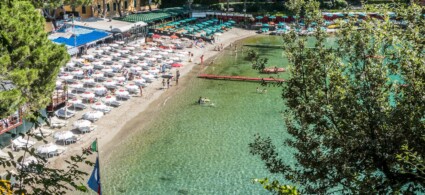
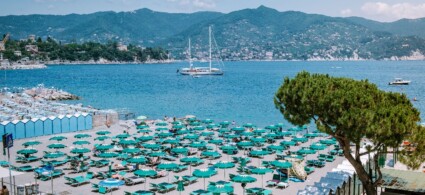
Liguria is an excellent choice for seaside holidays. The Ligurian coast is one of Italy’s most fascinating, characterised by a distinctive and evocative landscape; it’s divided into two celebrated riviere, the Riviera di Levante and the Riviera di Ponente, each subdivided into riviere and gulfs with evocative names: dei Poeti, delle Palme, dei Fiori…
The Riviera di Levante is the postcard image of Liguria: mountains tumble down to the sea, so the coastline is high and jagged, characterised by headlands, cliffs, inlets and bays.
The beaches are tiny, the sea quickly deep, and the landscapes and villages that frame them spectacular. The most famous seaside resorts in this area are Rapallo, Santa Margherita Ligure, Chiavari and Sestri Levante.
On the Riviera di Ponente, cliffs are interspersed with wide valleys reaching down to the sea, so you’re more likely to find sandy beaches, including some stretching several kilometres. Among the busiest resorts in this area are San Lorenzo al Mare, Arma di Taggia, Alassio, Pietra Ligure and Finalmarina.

For those coming from northern Italy, the simplest way to reach Liguria is by car; depending on where you live, train travel can also be convenient: Genoa is well served by direct trains from Milan and Livorno.
Flying is the quickest option for those coming from the south, islands and south-east. Genoa airport is served by low-cost flights from major Italian cities; it’s just a few kilometres from the centre, which is connected by shuttle bus and trains.
Another option for those arriving from Sardinia and Sicily is the ferry: it’s slower but allows you to bring your car and move freely once you arrive.
Whether for business or tourism, Liguria has attracted plenty of visitors for decades… indeed, for centuries! This means today’s travellers wishing to visit Liguria can count on a large number of hotels, B&Bs, flats and holiday homes.
Seaside resorts offer greater choice, whilst in small villages options are more limited. Cinque Terre has a very good selection of accommodation, but they’re also very popular destinations, so it’s not uncommon to find everything fully booked.
Portofino and other renowned destinations are openly aimed at wealthy clientele, with accommodation predominantly comprising 4 or 5-star hotels and exclusive villas, but generally Liguria isn’t a budget destination (except for some lesser-known spots).
It’s therefore important to book in advance, especially if you want a beachfront hotel (among the most sought-after): this way you’re sure to secure the best-value rooms or the most beautiful ones, depending on what you’re after.
Exploring Liguria by car is really easy as the region is crossed by two major motorways allowing you to move quickly from east to west (or vice versa).
One is the A10 Autostrada dei Fiori (Flower Motorway) connecting Genoa to Ventimiglia, the other is the A12 which leads from Genoa to Tuscany; the latter intersects with the A15 at La Spezia, which leads to Parma. Along the Ligurian coast runs another important road, the SS1 Aurelia (Aurelia highway), which follows a Roman road – it has therefore been one of the most important communication routes since ancient times!
It’s true that train travel is a good way to get around Liguria, but only for the most famous cities and villages. Some isolated beaches (usually among the most beautiful) and mountain hamlets are difficult or impossible to reach by public transport.
If Liguria is too far for you to drive, you can reach it by flying with a low-cost flight to Genoa or by ferry and hire a car locally. It’s always advisable to book your car in advance as online rates are more competitive, and if you hire on arrival you’ll have to make do with whatever models remain available, whereas booking online gives you far more choice.
Liguria is a region in north-western Italy and is one of three regions bordering France (the other two being Piedmont and Valle d’Aosta). It borders Piedmont to the north, Emilia-Romagna to the north-east and Tuscany to the south-east.
It’s bathed to the south by the Ligurian Sea, which represents the most northern part of the western Mediterranean.


 Hotel
Hotel  Budget accommodations
  Apartments
  Family Hotel
  Luxury Hotel
  Resorts